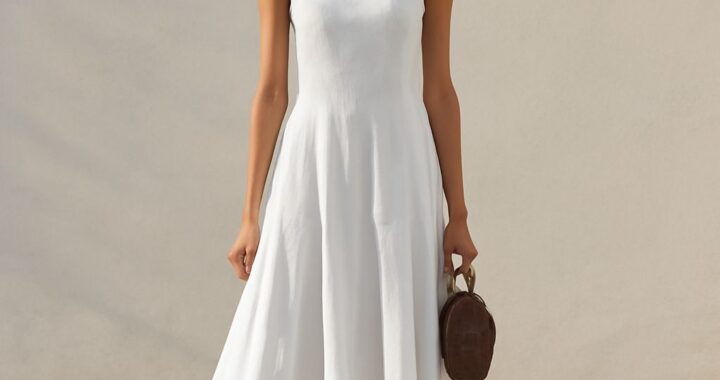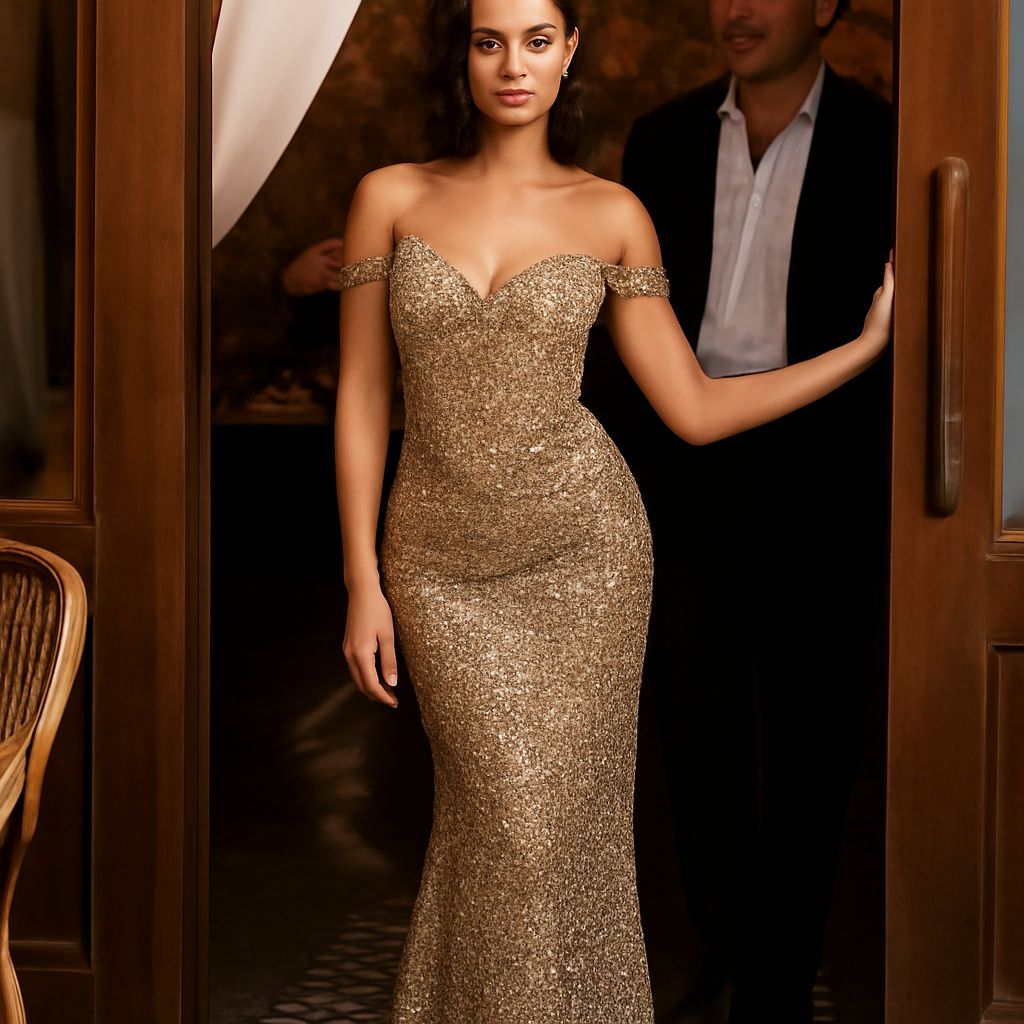
Glitter dresses differ most in how their sparkle is built into the fabric. Choose sequins for visible texture and movement, glittered fabric for a lighter surface, or foil finishes for a smoother shine. Then use silhouette, length, lining, and occasion to narrow the choice.
The right dress should look luminous without restricting your stride, catching on everything, or overwhelming your accessories. Start with the surface, then compare shape and construction.
Glitter Dresses: Understand the Sparkle Surface
Reflective materials do not all drape or feel the same. A dress covered with attached pieces behaves differently from fabric printed or woven with shine.
Sequined dresses: raised texture, weight, and drape
Sequined dresses use small discs, paillettes, or shaped embellishments attached to a base fabric. Because each sequin adds weight, a fully embellished dress usually hangs more firmly than an unembellished one. The surface may bend, but it will not flow as softly as satin or lightweight jersey.
Sequins also create texture. They catch light as you move, making fitted shapes look especially defined. Check the sequin direction and attachment before buying. Overlapping pieces can feel scratchy inside the arms, under the bust, or along the neckline. Smaller, flatter sequins typically feel easier to wear, while large or densely layered pieces create stronger shine and more structure.
Glitter mesh, glitter knit, and foil finishes
Glitter mesh may have shimmer woven into the net or applied as a coating. It often feels light but can remain sheer, so it needs a lining or an opaque underdress. Glitter knit has more stretch and softness, making it useful for body-skimming styles, although heavy glitter can reduce the fabric’s recovery over time.
Foil and metallic finishes create a smooth, reflective surface rather than a raised one. These fabrics usually slide over the body more easily and avoid sequin snags, but they can show creases, cling to hosiery, or emphasize every fold. Treat the surface as a fabric decision, not as a substitute for sequins.
Dress silhouette names for choosing the right shape
Learning a few dress silhouette names makes online shopping and alterations much easier. The silhouette describes the outline of the garment, not its sparkle level.
Fitted silhouettes: sheath, column, and mermaid
A sheath follows the body from the neckline to the hem with minimal flare. It looks polished and modern, but dense embellishment can make a sheath feel restrictive at the knees or hips. Choose stretch or a back slit when you need more walking comfort.
A column hangs in a long, relatively straight line. It gives sparkle a clean, uninterrupted backdrop and can visually lengthen your frame. A mermaid stays fitted through the torso, hips, and upper legs before flaring near the knee or lower. This creates dramatic movement but requires a hem wide enough for comfortable steps.
Fluid silhouettes: A-line, fit-and-flare, and empire
An A-line is narrower at the top and gradually widens toward the hem. It balances a detailed bodice with an easier skirt and works well when you want room to walk or dance. A fit-and-flare follows the waist and upper hips, then releases into a fuller skirt. It defines the waist while giving the lower body more movement.
An empire silhouette places the seam or waistline just below the bust. The fabric then falls away from the body, creating a fluid, elongated effect. This shape suits lightweight glitter fabrics particularly well; heavily sequined skirts may look bulky unless the dress uses controlled volume and a supportive lining.
Long sequin dresses for formal events
Long sequin dresses make the strongest impact at evening weddings, galas, black-tie celebrations, and formal parties. Choose a column or mermaid when you want a sleek, high-impact result. Choose an A-line or fit-and-flare when movement and dancing matter more.
When sequin gowns are the right choice
Sequin gowns suit events where a floor-length finish feels appropriate and the dress itself can serve as the main visual feature. Full coverage creates a refined effect in darker shades such as midnight blue, emerald, burgundy, or black. Silver, gold, and brighter colors look more theatrical, especially under direct lighting.
Consider the venue before choosing dense embellishment. A heavily covered gown may feel warm indoors and cumbersome on stairs. For a lighter option, look for sequined panels, a glittered bodice with a plain skirt, or a dress with an open back and breathable lining.
Choose the hemline, train, and coverage
The hem should skim the floor without bunching beneath your shoes. Try the dress with the heel height you plan to wear, and walk several steps before committing. A small sweep train adds ceremony but needs bustle points or a way to lift it while moving. Avoid a long train if you expect crowded spaces, outdoor ground, or frequent dancing.
Balance coverage with the dress’s surface. A high neckline, long sleeves, or an illusion panel can make intense sparkle feel formal rather than exposed. If the bodice is heavily embellished, a clean neckline and simple skirt often look more intentional than several competing details.
Inspect construction, comfort, and styling details
Lining, movement, and snag checks
Run your hand over the inside seams and lining. The lining should protect your skin from rough edges and extend through areas that rub, including the armholes, waist, and side seams. Test sitting, raising your arms, turning, and taking a full stride. A side slit, stretch panel, or back vent can improve mobility without changing the overall silhouette.
Inspect the closure, hem, and embellishment attachment. Loose threads, sharp sequin edges, and exposed hooks can cause snags. Test the dress against your hosiery, handbag, and coat fabric. Carry a small repair kit with matching thread, a needle, and clear nail polish for an emergency snag or loose thread.
Accessories that support the dress
Let one element lead. With dense sparkle, choose simple earrings, a streamlined clutch, and shoes with minimal decoration. A sleek metallic shoe can repeat the dress’s shine, while a matte shoe reduces visual competition. Match the metal temperature when possible, but do not force an exact match if the dress mixes silver, gold, or iridescent tones.
Keep the neckline and hairstyle in proportion. Statement earrings work with a clean neckline and pulled-back hair; a detailed neckline usually needs smaller earrings. Choose a wrap or tailored coat with a smooth lining so it will not catch on the surface. The final check is practical: you should be able to walk, sit, lift your arms, and leave without constantly adjusting the dress.