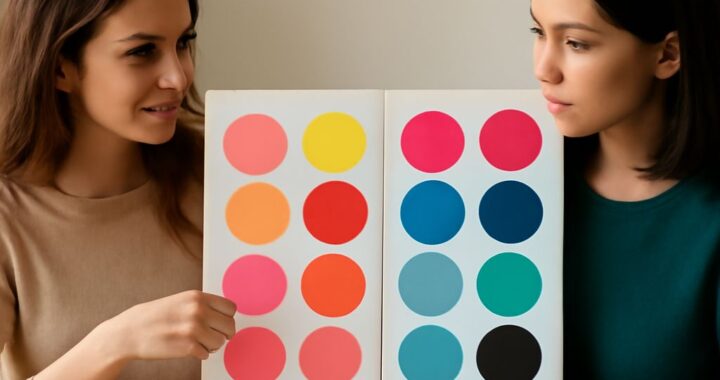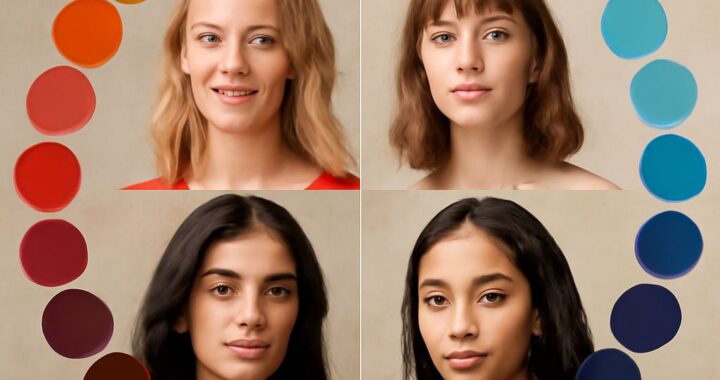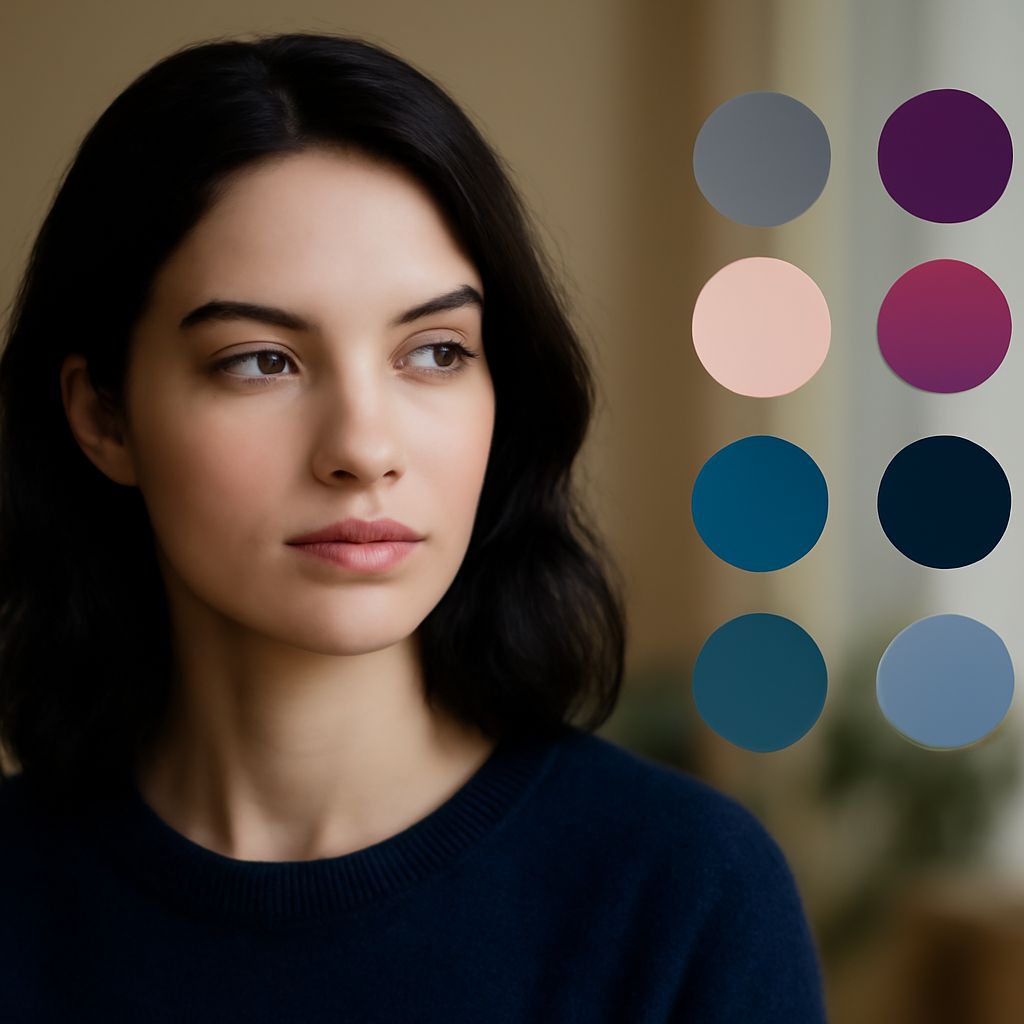
Winter season colors usually look most harmonious when your overall coloring supports cool temperature, clear chroma, and strong depth or contrast—not simply when your hair is dark. Your best hair direction should balance your skin, eyes, natural depth, and contrast as a complete picture.
Seasonal color analysis gives you a useful framework rather than a fixed rule. Start with the seasonal system, then compare hair shades against your coloring before choosing permanent color.
How winter season colors fit the seasonal hierarchy
The seasonal system begins with four broad families: Spring and Autumn are generally warm, while Summer and Winter are generally cool. Each family then divides according to depth, chroma, and contrast. For example, Winter may include cool, deep, or bright variations, while Summer usually emphasizes cool, light, or muted qualities.
These seasonal color palettes describe relationships among colors, not isolated swatches:
- Warm palettes: Golden, peachy, coppery, or yellow-based colors usually appear more connected to your coloring.
- Cool palettes: Blue, pink, red, ash, and violet-based colors tend to create more harmony.
- Light palettes: Pale shades and low visual weight keep the overall effect airy.
- Deep palettes: Darker shades provide enough weight for rich coloring and stronger contrast.
- Muted palettes: Soft, gray-influenced colors blend instead of competing with your features.
- Bright palettes: Clear, saturated colors make the eyes and skin look more vivid.
Winter commonly sits at the cool, deep, and bright end of the system. However, not everyone with dark hair belongs to Winter, and not every Winter needs black hair.
Identify temperature, depth, and chroma in a season color palette
Assess your coloring in natural daylight without makeup, colored lenses, or strongly tinted clothing. Look for how colors affect your face, rather than deciding from one feature.
- Temperature: Compare warm ivory with bright white, or coral with blue-red. The better color usually makes your skin look more even.
- Depth: Notice whether light, medium, or dark colors support your features. A very deep shade can overwhelm light coloring.
- Chroma: Compare clear colors with softened, grayish versions. Bright coloring usually looks energized by clean color, while muted coloring prefers subtlety.
- Contrast: Consider the difference between your skin, eyes, brows, and hair. High contrast can carry sharper color combinations; low contrast often suits blended ones.
Your eyes can reveal your best direction through clarity, flecks, and definition. Skin response matters even more: harmonious colors tend to reduce the appearance of dullness, shadows, or redness. Your natural hair offers evidence about depth and contrast, but it is not a verdict. Sun exposure, gray, dye, and lighting can all distort its apparent temperature.
Translate a seasonal color palette into hair-color directions
Use your strongest seasonal qualities first. A hair color palette works best when its temperature, depth, and chroma repeat the traits already visible in your face.
- Warm: Consider honey blonde, golden brown, caramel, copper, or warm chestnut. These shades suit coloring that looks clearer and healthier beside gold or peach.
- Cool: Consider ash blonde, mushroom brown, cool espresso, blue-black, burgundy, or violet brown. Avoid excessive orange when your skin looks calmer beside silver or blue-red.
- Light: Choose beige blonde, champagne, light ash brown, soft golden blonde, or light copper. Keep the shade delicate if dark color creates heavy shadows.
- Deep: Try espresso, dark chocolate, deep auburn, rich mahogany, or black-brown. Deep Winter coloring may also support a clear blue-black when the contrast feels intentional.
- Muted: Choose taupe brown, dusty beige, soft chestnut, rose brown, or subdued auburn. Lower saturation keeps the hair from overpowering gentle features.
- Bright: Consider clear copper, vivid auburn, glossy chocolate, jewel-toned burgundy, or crisp black. Bright Winter coloring usually benefits from clean definition rather than smoky warmth.
If you identify with Winter, test cool shades before warm ones, and compare both depth and clarity. A deep, clear brunette may harmonize better than flat black; a cool red may work better than orange copper. Your ideal result should make your eyes look sharper and your skin more even, not merely look striking on its own.
Check a hair color palette with temporary visual tests
Test the direction before committing to permanent dye. Use clip-in extensions, wigs, temporary color sprays, or washable glosses in two or three closely related shades.
- Take photos in indirect daylight with a neutral top and minimal makeup.
- Compare one warm shade with one cool shade at a similar depth.
- Compare one light shade with one deep shade, keeping temperature consistent.
- Check whether each option brightens your eyes, smooths your complexion, and defines your features.
- Reject shades that make your skin look gray, yellow, uneven, or more flushed, even if the color itself appeals to you.
View the tests from normal conversation distance, not only in a close-up mirror. If one shade makes your face look clearer before you notice the hair, it is usually the stronger seasonal match.