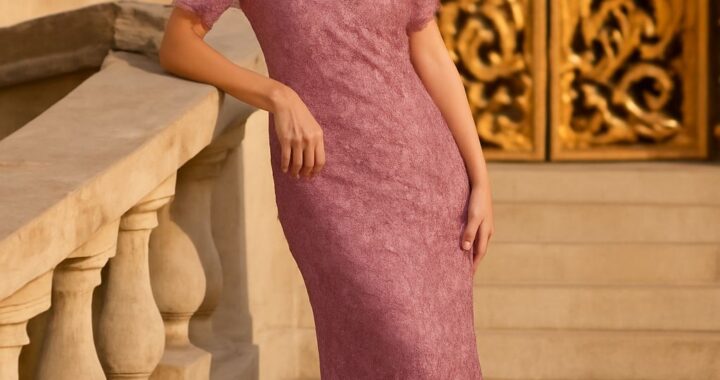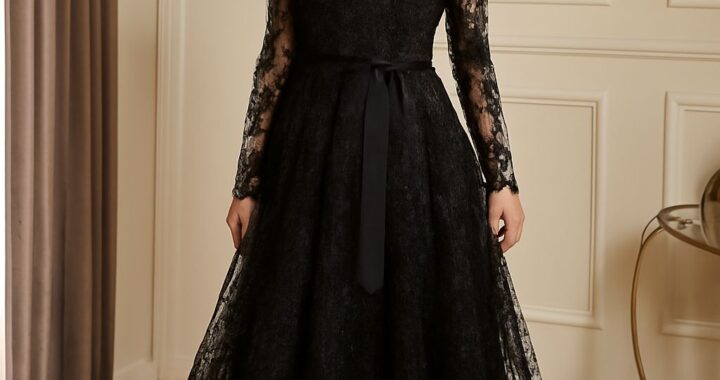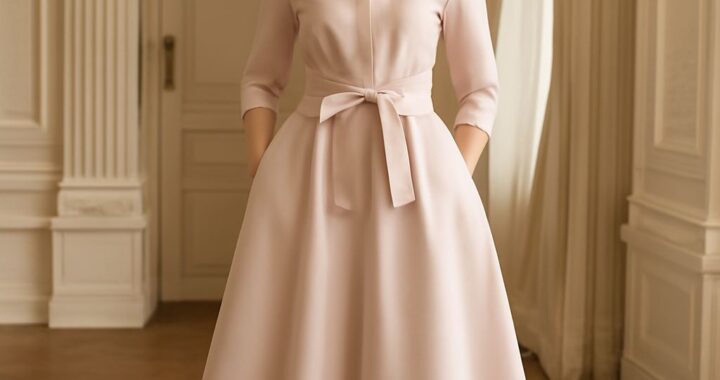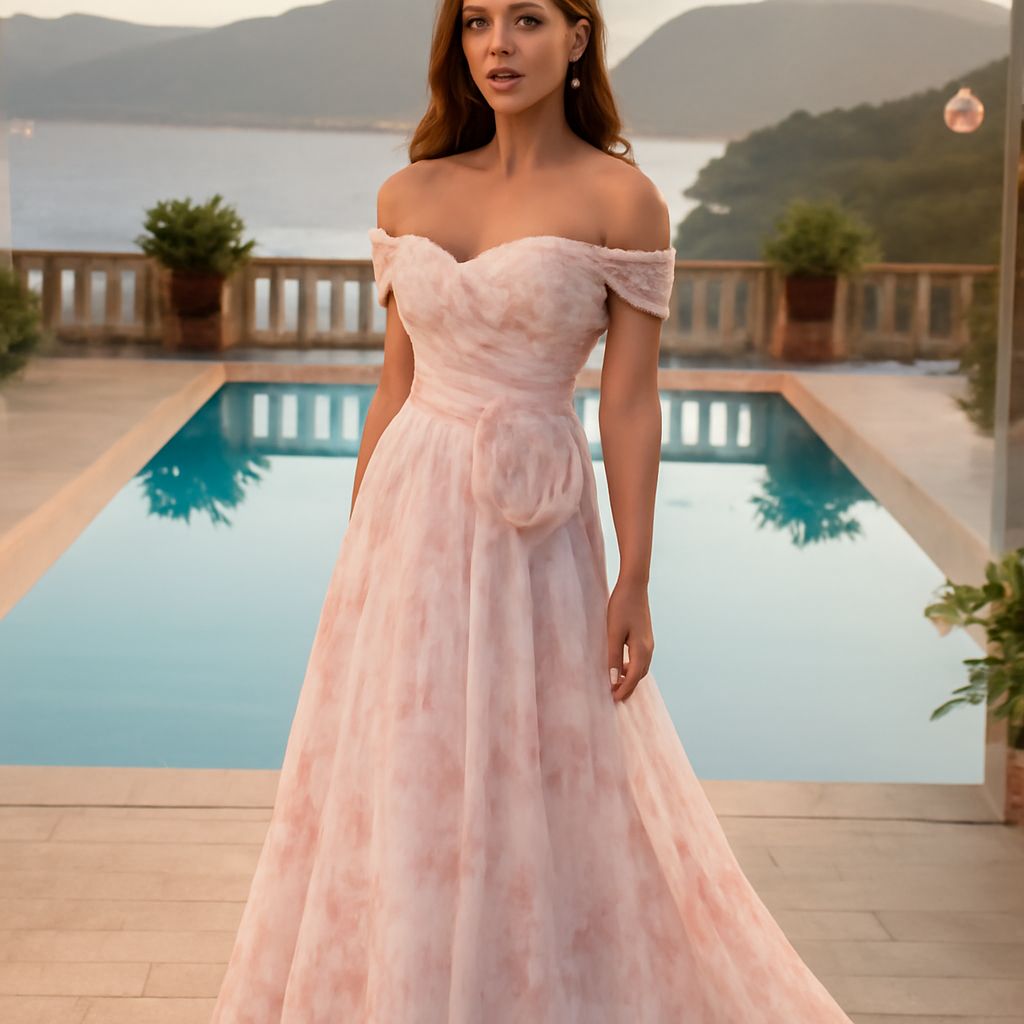
Choose long evening gowns by starting with the event’s dress code, then check proportions, coverage, and neckline support. A floor-length style should skim the floor without trapping your shoes, while the waist, bodice, and skirt must align with your frame.
The right gown feels secure when you walk, sit, and raise your arms. Use your actual event shoes during fitting, especially when selecting petite formal gowns or any design with a train, slit, or off-the-shoulder neckline.
How Long Evening Gowns Fit the Dress Code and the Floor
A formal or black-tie invitation usually supports a full-length gown, while a semiformal event may allow a shorter hem. If the wording is flexible, choose a simpler long gown for daytime ceremonies and a more embellished design for evening receptions.
Full-length gowns should nearly touch the floor at the front. The hem may sit about half an inch above the ground, allowing your shoe to move freely without creating a visible gap. A dramatic train can extend behind you, but it should not interfere with stairs, dining, or crowded dance floors.
- Check walking clearance: Take several steps, turn, climb a few stairs, and sit down. You should not step on the skirt or pull the fabric forward with each stride.
- Fit the waist correctly: The waist seam should rest at your natural waist or at the gown’s intended empire or dropped-waist position. A seam that sits too high or low can distort the skirt and shorten your proportions.
- Bring the right shoes: The heel height changes the hem and your posture. Try on the gown with the exact shoes, or with a pair matching their height.
- Account for the fabric: Satin, velvet, and heavy beading can pull downward, while chiffon and tulle move more easily. Test how the material behaves when you walk.
For an event involving outdoor travel, choose a manageable hem, a secure bustle, or a shorter front layer. You can still achieve a formal look without sacrificing movement.
Petite Gowns: Bodice Scale, Skirt Volume, and Hem Alterations
Petite gowns should be proportioned for a shorter frame, not merely shortened at the hem. Look for a bodice that ends at your natural waist, armholes that do not gape, and shoulder seams that sit directly on your shoulders.
Oversized lapels, wide straps, very deep necklines, and heavy embellishment can overwhelm a petite frame. A narrower neckline, defined waist, or vertically placed beadwork often creates a longer visual line. This does not mean you must avoid volume; choose gathered tulle or a full skirt with a controlled waist instead of several bulky layers beginning at the hips.
Check the skirt’s volume while wearing your event shoes. Excess fabric can hide your footwear, make walking difficult, and pull the waist downward. A slimmer A-line, column, or softly flared skirt usually feels easier to manage than a very wide ballgown silhouette.
Plan alterations in the correct order:
- Confirm the shoulder, bust, and waist fit before changing the hem.
- Adjust the bodice length if the waist seam sits too low or the bust points do not align.
- Hem the gown with your final shoes, allowing enough clearance for walking.
- Recheck the lining, outer skirt, lace, and train so every layer ends at the intended length.
Petite formal gowns may still need alterations, particularly when the design includes a fixed waist, intricate hem, or shaped neckline. Avoid shortening through the middle unless a qualified tailor can preserve the gown’s structure and pattern.
Modest Evening Gowns: Sleeves, Necklines, Backs, and Overlays
Modest evening gowns can provide substantial coverage while retaining shape and movement. Instead of choosing the most covered design automatically, decide which areas you want covered: arms, chest, back, legs, or shoulders.
- Sleeves: Long sleeves offer the most arm coverage; elbow-length and sheer sleeves feel lighter while maintaining a polished finish.
- Necklines: A bateau, jewel, square, or high V neckline can cover the bust without looking severe. Check that the neckline stays flat when you sit.
- Backs: A higher back, illusion panel, or keyhole gives coverage without making the gown look closed-in. The panel should lie smoothly rather than buckle.
- Overlays: Chiffon, lace, or tulle layers add coverage across the arms, neckline, or torso while preserving the underlying silhouette.
Balance coverage with structure. A high neckline pairs well with a defined waist or open sleeves, while a long sleeve can work with a lower back or lighter fabric. If you prefer leg coverage, select a closed front or modest slit that still permits a full stride.
Check opacity under the venue’s lighting. Sheer sleeves and illusion panels can appear more transparent in photographs or bright indoor light than they do in a fitting room.
When an Off the Shoulder Evening Gown Works: Fit, Support, and Comfort
An off the shoulder evening gown works best for formal or black-tie events when you want a romantic neckline without a strapless appearance. It suits gowns with an organized bodice, defined waist, and enough structure to keep the neckline in place.
Fit determines whether the style feels elegant or distracting. The neckline should rest evenly across both shoulders without digging into your upper arms. Raise your arms, reach forward, and sit down. If the gown climbs sharply, restricts movement, or needs constant adjustment, the elastic or boning may be too tight, or the bodice may be too loose.
Support usually comes from internal boning, a structured bust, a firm waistband, silicone grip, or discreet straps hidden beneath the neckline. Do not rely on the neckline alone to hold the gown up. The bodice should fit close to your rib cage and support the bust without compressing it.
Choose a neckline width that matches your shoulders and the event’s formality. A broad fold creates a softer, more dramatic effect; a narrow band looks cleaner and may stay more secure. If you need additional support, ask whether clear or removable straps can be added without changing the gown’s appearance.
Before the event, wear the gown for at least several minutes with your intended undergarments and jewelry. Confirm that you can walk, dance, sit, and lift your arms comfortably while the neckline remains level.