
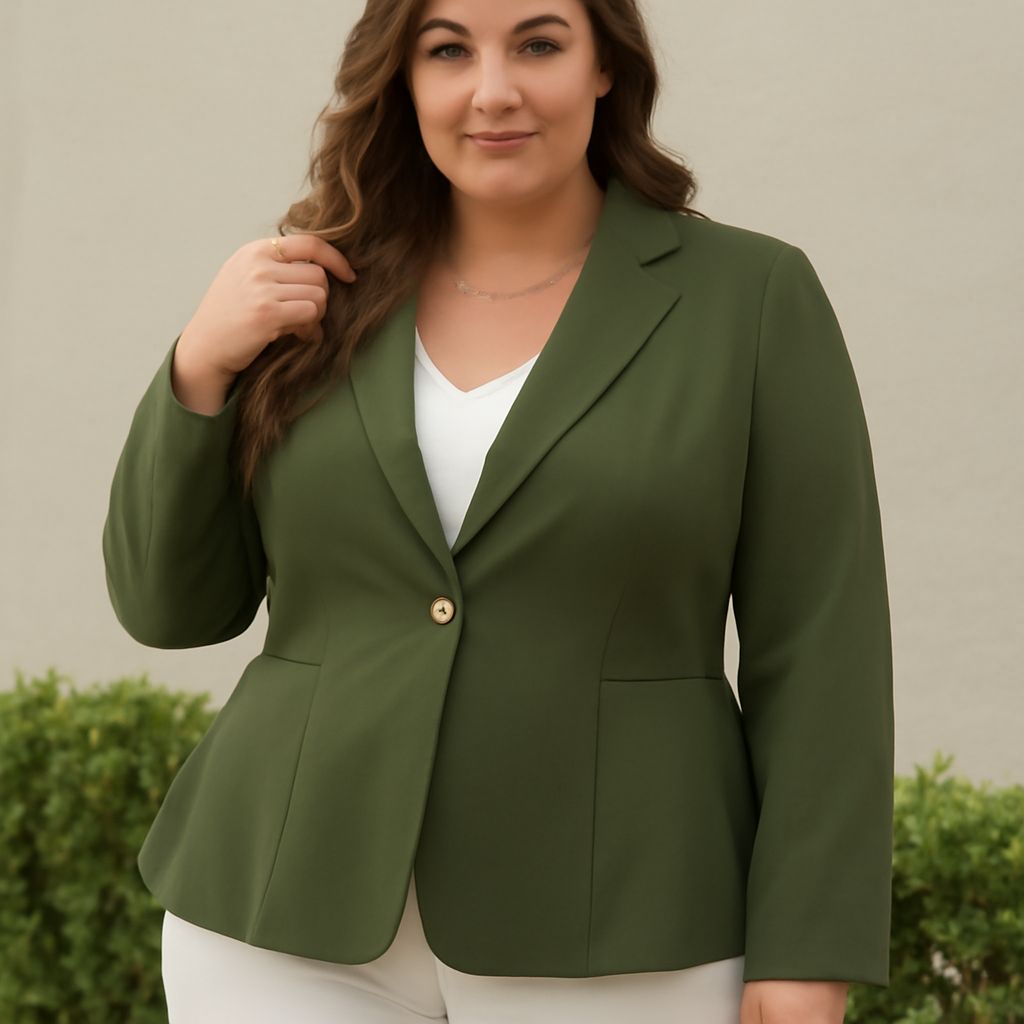
A shoulder seam can tell you a surprising amount about a jacket before you have even looked in the mirror. When it sits comfortably at the edge of your shoulder, the rest of the outfit has a much better place to start. A well-cut tailored layer in a fuller size can make jeans feel intentional; in black, it can take the same outfit to dinner.
Start with the parts that are hardest to alter
Try on a plus size blazer over the kind of top you plan to wear most often. A thin camisole and a substantial sweater will give you two very different fitting-room results. Stand naturally, then reach forward, lift your arms, and sit down. The jacket should let you move without the collar climbing up your neck or the sleeves pulling sharply across your upper arms.
Look at the shoulder seam from the front and side. It should generally land near the point where your shoulder meets your arm; an intentionally dropped shoulder is a design choice, with a softer, more relaxed outline. If a structured shoulder extends far beyond you or feels tight, try another cut. Sleeve hems are often easier for a tailor to shorten than a shoulder is to rebuild.
Across the back, check for pulling when you reach forward. At the chest, bring the fronts together even if you expect to wear the jacket open. If you want to button it, fasten it and check that the fabric lies smoothly without deep horizontal strain lines. If you prefer an open style, make sure the fronts hang as intended and the lapels do not bow away from your body.
A women’s plus size blazer should feel comfortable through the bust and upper arms before you start debating accessories. If one size accommodates your chest but hangs loosely elsewhere, ask a tailor what can be adjusted and include that work in your budget. A different brand’s cut may need fewer changes; compare the garment’s actual measurements with yours instead of relying on a universal size chart.
Find your preferred waist and length
A plus size fitted blazer follows the body more closely through the waist, often with shaped seams or darts. Darts are small stitched folds that give fabric contour. Choose this shape when you want definition over a dress or a neater line with wide-leg pants. You should still be able to button it, if designed to close, without the fabric pulling.
For a softer alternative, try a waist-shaped jacket in a fuller size with a little room through the middle. If the waist seam sits noticeably above or below your natural waist, decide whether you like that proportion in the mirror. A fitted jacket in a fuller size can be worn open too: the shaping remains visible even when the buttons are purely decorative for the day.
The lengths of plus size blazers change how a look is divided. A cropped cut can show the waistband of high-rise trousers; a hip-length jacket offers more coverage with a straight skirt or jeans. A longer cut makes an easy layer over a slim dress, but check it from the side while seated. There is no required hem for any body: choose the one that works with the rise, pockets, and proportions of the clothes underneath.
Plus size black blazer styling that feels like you
A plus size black blazer is useful because it can shift character with what surrounds it. For work, wear it with a cream knit, straight trousers, and loafers. For dinner, try a satin camisole, dark jeans, and a small metallic earring. The change in texture does much of the work while the color palette stays quiet.
Look at the fabric in daylight as well as fitting-room light. Matte black tailoring in plus sizes reads differently from a smooth, slightly lustrous finish; black suiting in a fuller size can be subtle or striking depending on that texture, and one may blend into your trousers while the other makes the jacket the focus. If you want a matching suit effect, take the trousers with you and compare the blacks together. Two shades can look very different side by side.
For a relaxed weekend outfit, wear a black tailored jacket in a fuller size over a striped tee with straight jeans. Roll or push up the sleeves only if they stay comfortably in place; a clean cuff can expose a bracelet without creating a bulky fold. For an evening look, a black tailored layer in a generous size can sit over a slip dress with a low heel. Try the whole combination on: the neckline and lapels should complement each other rather than compete for attention.
Check the inside as carefully as the outside
A lining helps a jacket slide over other clothes and gives the inside a finished surface. Try reaching forward with it on: the lining should have enough room to move with the outer fabric. Check that it lies flat at the hem and sleeves and does not pull the shell out of shape. An unlined jacket may feel lighter and more relaxed, particularly over a simple top; inspect its inside seams for a neat finish.
Consider the fabric and care labels on plus size blazers in relation to your life. A structured woven jacket may hold a crisp line, while a softer knit version can feel more casual. If the label calls for professional cleaning, factor that into how often you expect to wear it. Look at the buttons and stitching, too: a loose thread is a small repair, while puckered seams or a lining that tugs at the hem can affect the way the whole garment hangs.
Make a sensible budget choice
Keep plus size blazers cheap by shopping sales, secondhand racks, or your own closet first, then assess the individual garment. Check the underarms for wear, inspect the closure, and try it with something close to the layers you will actually wear. A lower initial cost is less appealing if alterations and cleaning turn it into a larger project than you wanted.
Compare women’s plus size blazers by construction and usefulness: does the fabric recover after you sit, do the pockets lie flat, and can you wear the jacket with at least two outfits you already own? Women’s jackets in plus sizes come in varied cuts, so let fit and the care routine guide your decision. If you are shopping online, compare the listed garment measurements with a jacket you like and read the return conditions before ordering.
For a client lunch, choose a hip-length black jacket that fits your shoulders, then add a cream knit, straight-leg trousers, and loafers.
