A winter pant has to make room for more than your legs: there may be a base layer underneath, boots below and a jacket overlapping at the waist. That is why choosing men’s pants for snow starts with the whole outfit. Compare the cut, fabric and fastenings together, then try the combination you actually plan to wear.
Snow pants men can choose: shell or insulated?
A shell is the outer layer of a garment. An uninsulated shell gives you the option to choose layers underneath, while an insulated pant includes a layer intended to add warmth. Neither choice has a universal temperature rating: activity, weather, other clothing and personal preference all affect how warm you feel.
A waist-high pant is relatively straightforward to put on and take off. A bib has a higher upper section, usually held up by suspenders, and may provide more coverage at the waist. Think about how each works with your jacket and how easily you can use the closures while wearing gloves. A fitting is a good time to check the practical details, not just the mirror.
Snow pants men wear over a base layer need enough room to sit, bend and step without pulling. Bring that layer and the boots you expect to use when trying a pair. A cut that looks tidy standing still may feel very different once you crouch to fasten a boot.
Compare two documented designs
The 2023 evo review of Patagonia Insulated Powder Town Pants describes a two-layer H2No shell and 60 grams of recycled-polyester Thermogreen insulation. It also discusses the fit around boots. This is an example of an insulated design with a documented shell and lining, not a promise that every version or current listing has identical specifications.
For a different construction, OutdoorGearLab’s January 2024 review of Patagonia Stormstride Pants describes a hardshell design. A hardshell is an outer garment designed around a protective shell fabric rather than a description of how much insulation you will wear beneath it. Check the specific version’s product information and size chart before comparing it with the insulated model.
These examples show why a model name and year matter. A product can be revised, and a retailer’s current page may describe a different season. Look for the exact style, material and construction in the listing; if they are unclear, ask the seller. Neither example guarantees comfort or protection in severe conditions.
Read the material description carefully
A fabric may be described as water-resistant or waterproof, but the wording alone does not tell you how every part of the garment is constructed. Ask whether seams are sealed, how the zippers are covered and what the manufacturer’s stated testing or material description applies to. An untreated opening or a poor overlap with your jacket can matter alongside the fabric itself.
Breathability describes the ability of a fabric system to allow moisture vapor to pass through under specified conditions. Ratings and tests vary, so compare figures only when their methods and units are clear. Vents, when present, are openings you can adjust; they are separate from the material’s stated breathability. None of these terms means a garment will feel dry in every situation.
Some outer fabrics have a durable water-repellent finish, often shortened to DWR. It is a surface treatment, not the same thing as a waterproof membrane. Use the manufacturer’s care directions to maintain the garment and check what re-treatment, if any, is recommended for the exact material. Avoid adding a product merely because it worked on a different jacket.
Check the waist, legs and layers
Measure your waist and inseam using the brand’s instructions, then compare both with the chart for the model. The inseam is measured along the inside of the leg. If the chart uses body measurements, do not mistake them for the dimensions of the finished garment. Short, regular and long lengths can change where the cuff falls without necessarily changing the waist.
Men’s snow pants should have room for the base layer you intend to wear without forcing you to tighten the waistband excessively. Sit, bend your knees and lift a foot onto a low step in the fitting room. Check for pulling at the seat and knees, then stand up and see whether the waistband returns to a comfortable position. If you expect to wear a thicker layer on some days, test that combination too.
Look at the rise, the distance from the crotch seam to the waist, and consider how the waistband meets your jacket. Adjustable tabs or belt loops, when included, can help fine-tune fit within the garment’s range. They are not substitutes for a size that is substantially too large. For a bib, adjust the suspenders and check whether the upper section stays comfortable when seated.
Boots, pockets and fastenings
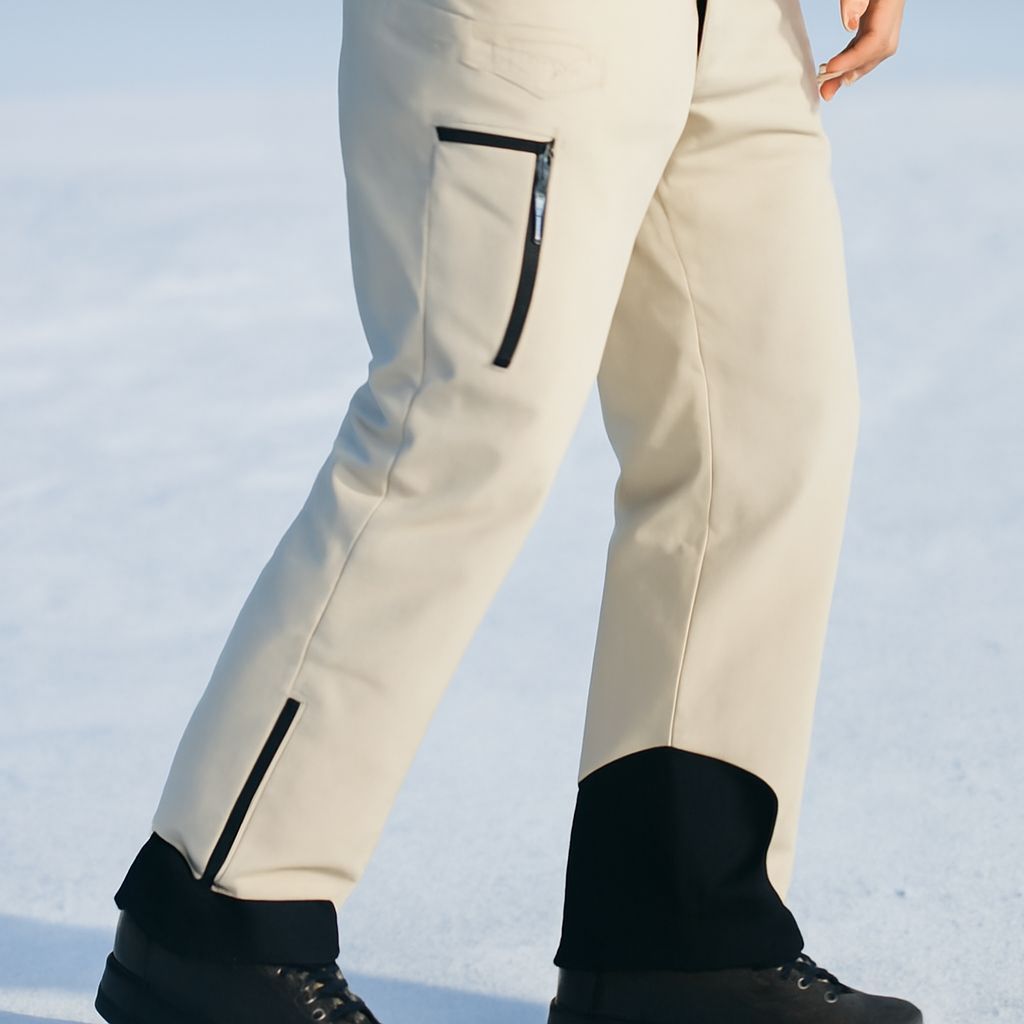
A gaiter is an inner cuff found inside the leg opening of some winter pants. Check how it is intended to sit over the boots you own and whether you can reach the boot closures. The outer cuff should also accommodate the boot without dragging excessively on the ground. Different boot shapes can change the result, even within the same labeled shoe size.
Check whether pockets and zippers are accessible with your jacket and gloves. Try any vents and inspect the cuff reinforcement.
For snow pants for men, a neutral color can make it easy to coordinate with an existing jacket; a brighter pair can become the main feature of the outfit. Look at the actual shade in daylight if possible. Appearance matters, but the waistband and cuff still have to work after the photograph is taken.
Plan the purchase and care
Before ordering snow pants, compare the full product description, shipping and return terms. Check whether an indoor try-on with tags attached is permitted, and keep the packaging until the fit is settled. If you are between sizes, ask the seller for garment measurements and compare them with a pair you already own.
Follow the care label for washing, drying and any re-treatment. Close the fastenings as instructed, check pockets and use products specified as suitable for the garment. Clean storage after the season makes the next fitting less of a surprise; inspect seams and cuffs before putting the pants away.
The right winter pants are the ones that work with your layers, boots and plans. Choose the construction first, then let the fit and the details finish the decision.