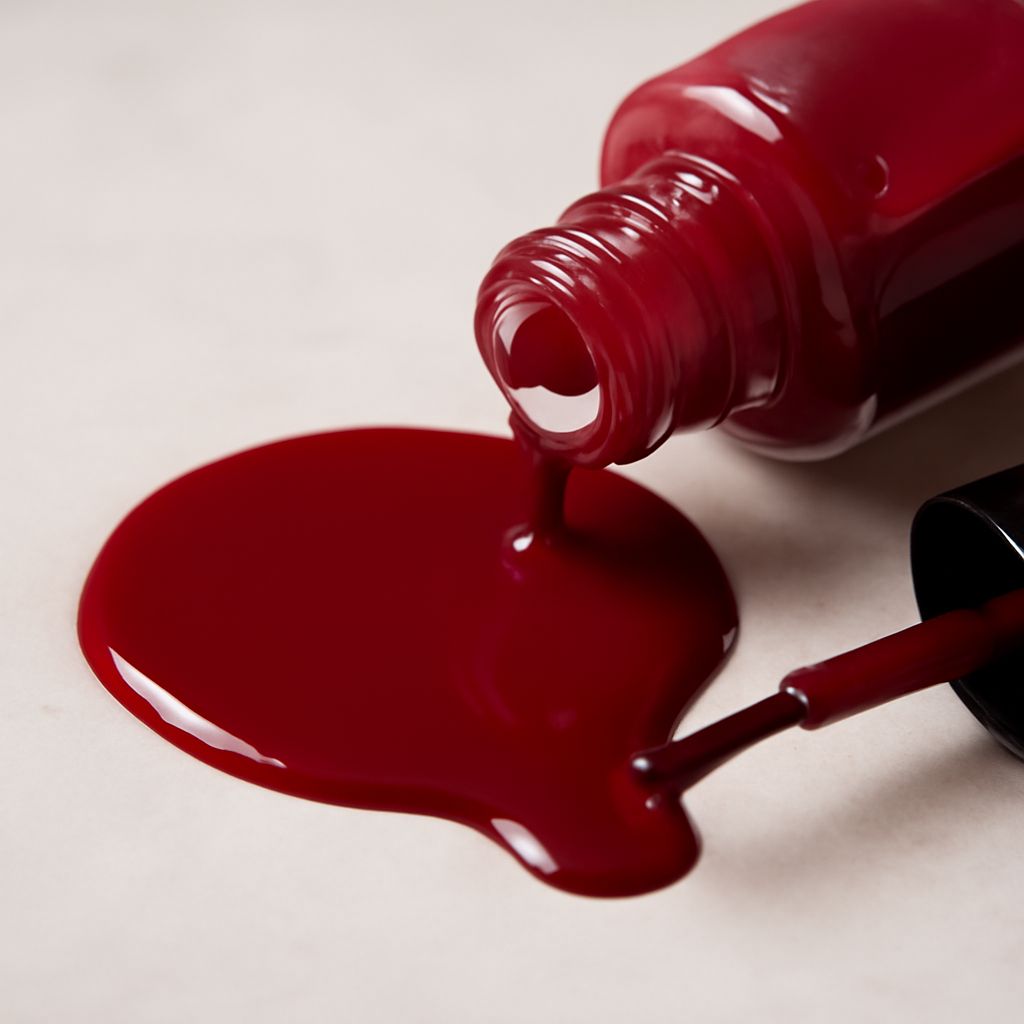
The brush slips, and suddenly your favorite shirt has a bright little souvenir of your manicure. To get nail polish out of clothing, start by lifting the excess gently and checking the fabric label before reaching for remover. Getting polish off clothes takes a little patience: the wrong solvent can damage the garment, and rubbing can turn a small spot into a much larger one.
How to Get Nail Polish Off of Clothes: Start With the Labels
Put the garment on a flat surface and separate the stained layer from the rest. If the polish is wet, gently lift any excess with the edge of a spoon or a clean white paper towel. Blot lightly; don’t sweep the color across the fabric. If it has dried into a raised blob, carefully lift loose material with a dull edge. Stop if the fibers start to pull.
Before you remove nail polish from clothing, find the fiber and care labels. Do not use acetone or acetone-based remover on acetate, triacetate, or modacrylic: these fibers can be damaged or dissolved. The University of Georgia Extension identifies those exceptions in its stain-removal guidance. Take such items to a professional cleaner and point out the stain.
For a dry-clean-only garment, silk, wool, leather, or a piece with delicate trim, ask a cleaner rather than experimenting at home. Sequins, coatings, prints, and glued decorations can react differently from the main fabric. If the fiber label is missing or you cannot identify the finish, that uncertainty is a good reason to stop. A cleaner needs to know both what spilled and anything you have already applied.
Identify the Polish and Test the Fabric
Ordinary nail lacquer, gel polish, and specialty finishes do not all behave alike. Check the bottle if you have it. The method below is for ordinary lacquer on a washable garment whose fibers are compatible with acetone. If the product is gel, cured under a lamp, or unidentified, ask a cleaner about the particular stain rather than assuming a home treatment will dissolve it. Glitter may also leave particles behind after the color lifts.
Use plain acetone only after checking the garment’s fiber content and care instructions. Acetone-based removers can contain oils, dyes, or fragrance that leave their own marks. Keep acetone away from flames, cigarettes, sparks, and heat; work with good ventilation and follow the product label. Protect the work surface and keep the bottle away from children and pets.
Test a small hidden area, such as an inside seam, with a little acetone on a white cotton swab. Let it dry and inspect it in good light. If color transfers, the surface changes, or the fabric feels damaged, stop and consult a cleaner. A successful test is a reason to proceed carefully with that spot, not a promise that every part of the garment will react identically.
Blot the Stain in Small Steps
For a compatible washable item that passes the test, place clean white paper towels or a white cloth beneath the stain to absorb the transferred color. Keep any printed or decorated part away from the solvent. Here is how to get nail polish off of clothes: use cotton swabs or clean white cloths and work from the outside of the spot toward its center.
- Moisten a swab or corner of a cloth with a small amount of acetone; don’t soak the garment.
- Dab the stain gently. As polish transfers, move the backing to a clean section and switch to a clean swab.
- Continue in short passes while color is transferring. Stop if the fabric changes or the stain stops improving.
- Rinse the treated area thoroughly with cool water, then follow the garment’s care label for washing. Keep the item away from heat and flames while solvent is present; follow the solvent and appliance instructions before laundering.
How do you get nail polish out of clothes when the first pass leaves a faint shadow? Check the fabric in good light and repeat the gentle treatment only if the garment remains unchanged and the care instructions permit it. If nothing transfers or the finish starts to change, stop. A professional cleaner may have options better suited to the remaining stain.
A Shirt, a Print, or a Special Finish
To decide how to get nail polish out of a shirt, pay attention to what sits behind the spill. A button placket, pocket, or second layer can catch color as it transfers, so separate the layers and place absorbent white material underneath. On a washable cotton shirt, use the label and hidden test before applying the method above; cotton describes the fiber, while dyes and finishes still need checking.
If polish lands on a printed design, avoid putting acetone directly on the print. Ask a professional, especially if the design is raised, shiny, or bonded to the fabric. For a delicate blouse with a stain near a seam or embellishment, point out both the polish and the trim when you take it in. Getting nail polish out of a shirt is less satisfying if the lettering comes away with it.
How do you get nail polish out of clothes with glitter still caught in the weave? Don’t pick aggressively at the threads. Once the liquid color has been treated and the fabric is dry, check whether loose particles lift without pulling; leave stubborn pieces to a cleaner. For gel polish, tell the cleaner whether it was cured, if you know. That detail helps describe what they are dealing with.
Check Before Any Heat
After rinsing and washing according to the label, inspect the area in daylight before using a dryer or iron. A ring of color, a stiff patch, or a shiny film can mean polish remains even when the brightest color has faded. Let the garment air-dry and look again: damp fabric can make a faint mark harder to see.
If you still see residue, keep heat away. For a tested, compatible washable fabric, another careful blotting attempt may help if color is still transferring; rinse again afterward. If the mark persists, the fabric changes, or you are unsure what to use, take the garment to a cleaner and explain what you tried. Getting the remaining polish off clothing may take specialist treatment, and the unheated garment gives that treatment a better chance.