Everyday jewelry works best when its proportions suit your routine. A figaro necklace offers a recognizable pattern and polished presence, while an Italian-style chain can describe several designs and construction approaches.
Choose your chain by examining its links, width, length, metal finish, and pendant compatibility. These details determine whether it feels subtle with a T-shirt, refined at work, or substantial enough for evening outfits.
What Defines a Figaro Necklace? Repeating Links and Proportion
A figaro necklace uses a repeating link pattern: usually three shorter oval or round links followed by one longer link. Some versions vary the ratio, but the alternating rhythm remains the defining feature.
The longer links create visual movement without making the chain look overly ornate. A narrow Figaro style feels clean and understated, while a wider version makes the pattern more noticeable. Flat, polished links reflect more light; rounded or diamond-cut links add texture and sparkle.
Check how each link connects before buying. Tightly assembled links usually create a smoother drape, while heavier links can feel more structured. The clasp should also match the chain’s scale rather than appearing delicate beside a substantial necklace.
What an Italian necklace Label Can Mean: Design or Manufacture
The phrase Italian necklace may refer to a design associated with Italian jewelry traditions, or to a chain made in Italy. It does not guarantee one specific pattern, metal quality, or construction standard.
An Italian-style chain might be a Figaro, curb, rope, cable, or another linked design. Focus on the details you will wear and handle: link shape, soldering, flexibility, clasp type, metal content, and surface finish. If country of manufacture matters to you, check the product specifications rather than relying on the label alone.
Italian-style designs often emphasize polished surfaces, balanced proportions, and a confident silhouette. Those qualities can make a chain versatile, but the actual construction determines comfort and durability.
Choose Width, Length, and Finish for Everyday Jewelry
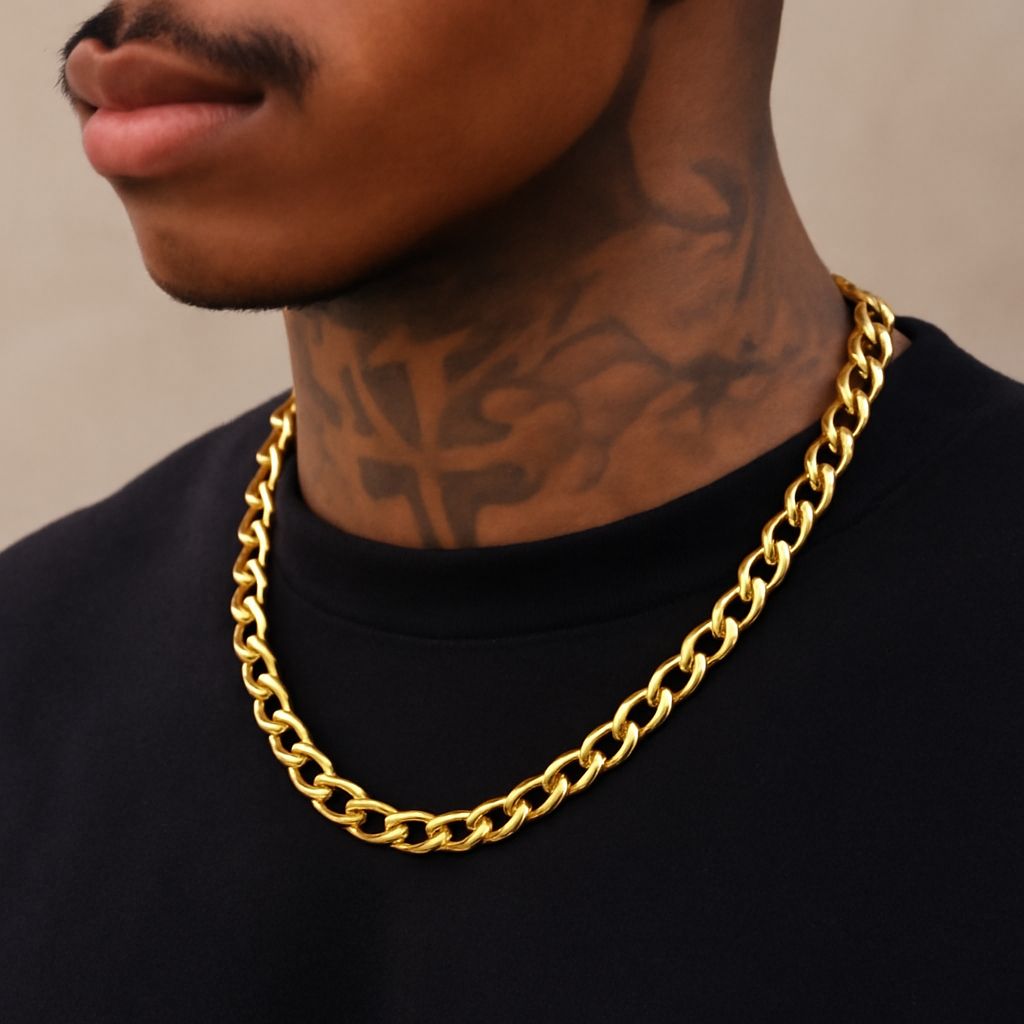
For a subtle everyday chain, choose approximately 1.5 to 3 millimeters wide. This range works well with casual shirts, office layers, and small pendants. A 4-to-6-millimeter chain looks bolder and can stand alone over a crewneck or open collar.
Length changes the necklace’s position and styling options:
- 16 to 18 inches: Sits near the collarbone and pairs easily with open necklines or a small pendant.
- 20 to 22 inches: Drops lower on the chest and works well over T-shirts, sweaters, and button-down shirts.
- 24 inches or longer: Creates a relaxed, visible layer and suits larger pendants or longer necklace combinations.
Measure against your usual necklines before choosing. A polished finish looks crisp and dressy, while a brushed or satin finish softens the effect and hides minor marks. Gold-tone, silver-tone, and two-tone finishes should coordinate with your watch, rings, and other everyday jewelry.
Wear the Chain Alone or With a Pendant for Versatile Outfits
Wear a medium-width Figaro chain alone with a plain T-shirt, knit top, or open button-down. Its repeating links provide enough detail without requiring a pendant. For workwear, choose a slimmer chain with a polished finish under a blazer or lightweight sweater.
When adding a pendant, match its weight to the chain. A small charm or initial suits a narrow chain and a shorter length. A medium geometric pendant works with a 3-to-5-millimeter chain, while a larger pendant needs a stronger clasp and thicker links.
- Pair a short, fine chain with a small pendant for a simple layered look.
- Wear a 20-inch Figaro chain over a crewneck with a flat, medium pendant.
- Combine a polished chain with a brushed pendant for controlled contrast.
- Use a longer Italian-style chain alone over a sweater when you want one noticeable focal point.