To make a controlled perfume body oil, combine 9.8 mL of carrier oil with 0.2 mL of essential-oil blend in a 10 mL bottle. Apply a few drops to pulse points—wrists, sides of the neck, and behind the ears—then use the remainder on broader, moisturized skin.
Knowing where to put perfume helps you control projection instead of creating one concentrated spot. Keep essential oils diluted; a finished body oil is not the same as undiluted essential oil.
Where to Put Perfume for Even, Controlled Coverage
Start with one drop on each wrist and one behind each ear. Add a small swipe at the base of your throat if you want more presence. These warm pulse points release aroma gradually, but they are not the only useful locations. For a softer halo, apply the oil along your collarbones, shoulders, or forearms. Smooth it over clean, moisturized skin instead of rubbing; friction can make the scent fade faster.
For broader body coverage, place a thin layer on your chest, upper arms, or legs after bathing. Start with less than you think: one to three drops per area. Add more only after five minutes, when you can judge the actual projection. Avoid your eyes, lips, broken skin, and freshly shaved areas.
How to Make Perfume With Essential Oils: Choose the Carrier and Notes
For how to make perfume with essential oils, build the formula around a stable carrier and a simple note structure. Jojoba feels light, resists rancidity, and suits a roll-on. Fractionated coconut oil feels silky and spreads easily, while sweet almond oil gives a richer body feel. Choose a carrier with a mild scent so it does not compete with the blend.
Start at a 2% dilution: 0.2 mL of aromatic material plus 9.8 mL of carrier makes 10 mL total. Increase the concentration only after checking the recommended dermal limit for every oil. Top notes create the first impression, often with citrus or light herbs. Middle notes form the heart, such as lavender, geranium, or floral oils. Base notes add depth and staying power, including cedarwood, frankincense, or patchouli.
Blend a Small Perfume Body Oil Batch
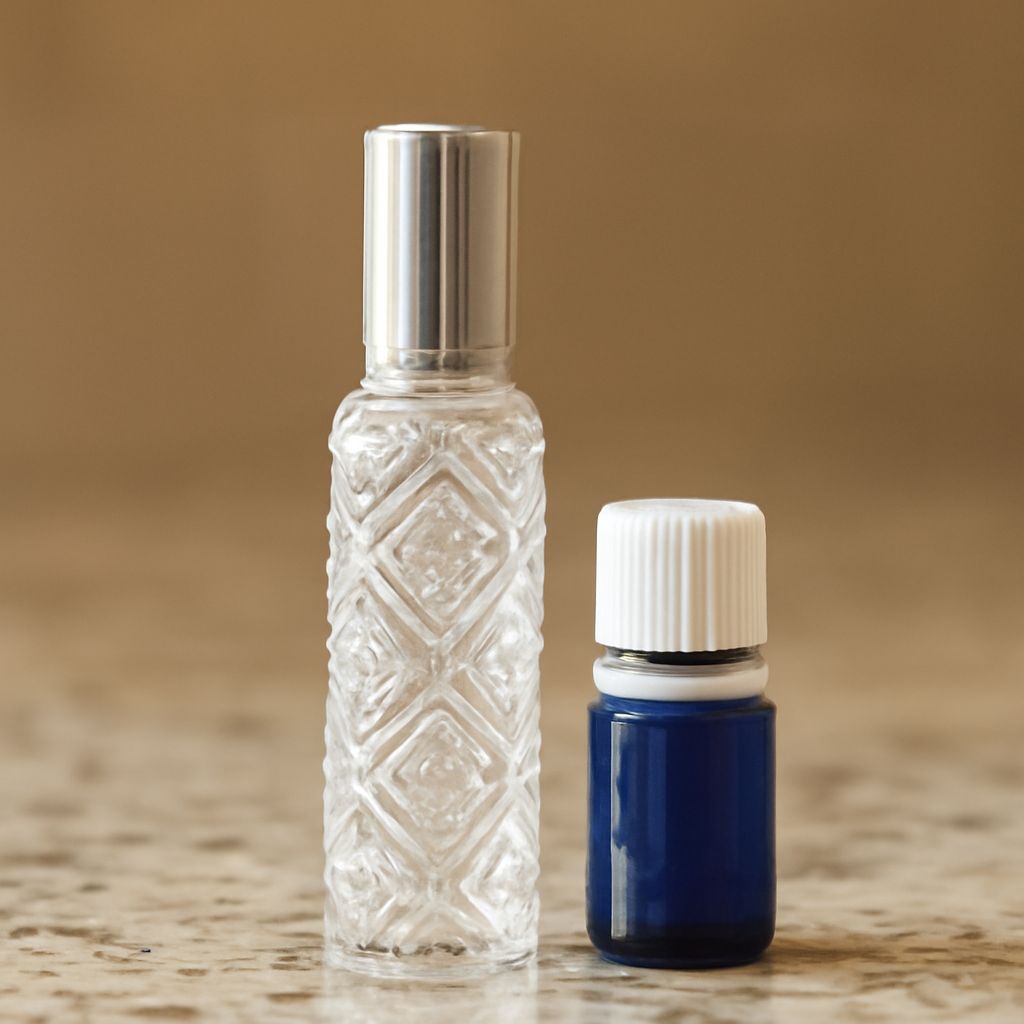
Use a clean, dry 10 mL amber bottle and a graduated pipette for more consistent measurements.
- Measure 0.2 mL of aromatic material. Try 0.08 mL base, 0.08 mL middle, and 0.04 mL top note.
- Add the base note first, followed by the middle and top notes. This order makes the formula easier to record and repeat.
- Pour in 9.8 mL of carrier oil, leaving a little room for mixing.
- Cap the bottle and roll it slowly between your palms. Do not shake vigorously, which can introduce air bubbles.
- Test one drop of the finished oil on a blotter, then patch-test a small skin area. Never test the undiluted aromatic blend on your skin.
- Adjust the next batch based on the result. If the scent feels sharp, reduce the top note and replace that volume with a middle or base note. If it feels heavy, reduce the base note. Keep the total aromatic volume at 0.2 mL.
Let the Blend Settle, Then Evaluate and Adjust It
Let the capped bottle rest for at least 24 hours, preferably three to seven days, in a cool, dark place. The first test emphasizes bright top notes; resting allows the middle and base notes to integrate, so the fragrance may smell rounder and less separate later.
Evaluate it on a blotter at five minutes, one hour, and four hours. Then test a small amount on skin and assess both scent and feel. A successful blend smells balanced after the top note fades, spreads without excessive greasiness, and leaves a soft scent for several hours. If it smells sour, the carrier seems rancid, or your skin stings, discard the batch. Label the bottle with its ingredients and date, and store it tightly closed away from heat and sunlight.