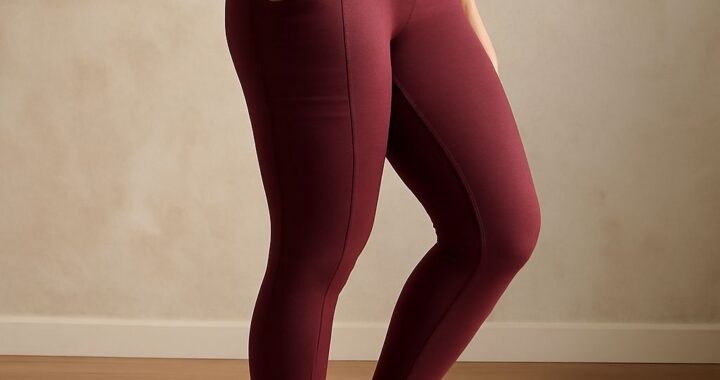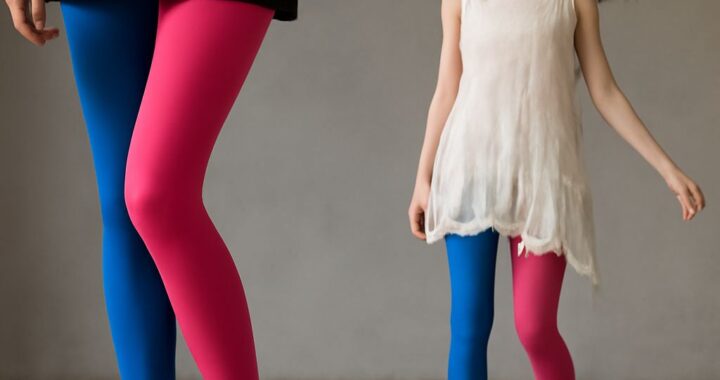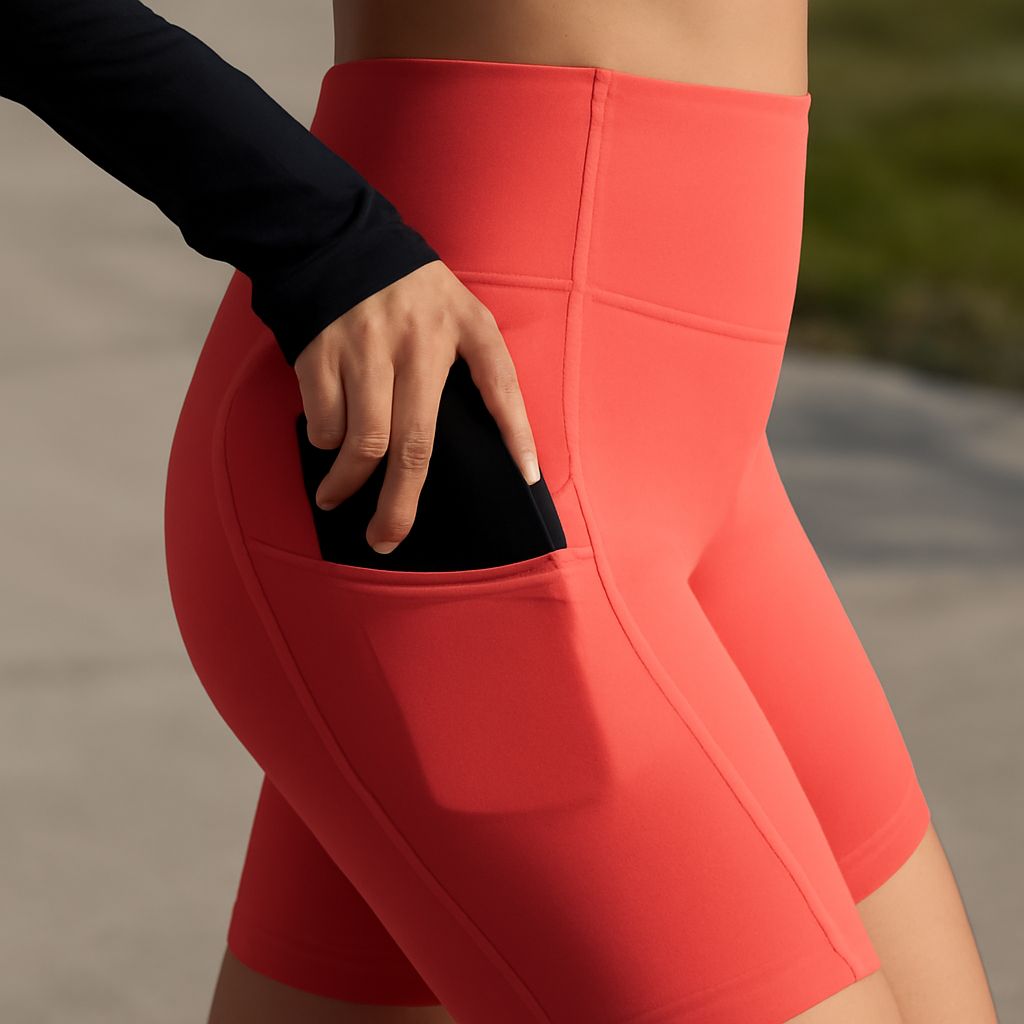
Leggings vs. tights comes down to fabric weight, opacity, and intended use. Leggings are substantial enough to wear as pants, while tights are hosiery designed to layer beneath another garment.
When you wear tights with shorts, choose the tights first based on coverage, then balance their color and density with the shorts, shoes, and outer layer.
Leggings vs. Tights: Construction and Opacity
Leggings use a thicker, more durable knit with an elastic waistband and strong stretch. They typically provide full opacity from the waist through the ankle, so you can wear them as a primary bottom. Some styles include pockets, compression panels, or a brushed interior.
Tights use a lighter stretch knit and usually include a hosiery waistband, gusset, and shaped legs. They may be sheer, semi-opaque, or fully opaque. Denier indicates fabric density: lower denier looks sheerer, while higher denier offers more coverage and warmth.
Even opaque tights remain hosiery rather than a replacement for leggings. Thin tights should not be worn as standalone leggings because they can become transparent under tension and lack the structure needed for frequent wear.
Choose a Palette for Color Tights
Use a simple three-part method to coordinate color tights without making the outfit feel busy:
- Start with a neutral base. Choose black, charcoal, navy, brown, denim, or cream for the shorts and main top.
- Select one tights color. Match the mood to the outfit: burgundy and forest green feel rich, cobalt feels crisp, and plum or rust feels softer.
- Repeat the color once. Echo the tights in a bag, scarf, sweater detail, or shoe accent. Keep the remaining accessories neutral.
For a low-risk combination, pair charcoal shorts with burgundy tights and black shoes. If your shorts already feature a print, pull one subdued color from that print instead of adding a separate contrast.
Pair Tights With Shorts: Balance Length and Opacity
Shorts length changes the visual proportion of your legs. High-waisted tailored shorts that end at mid-thigh create a clear, polished line over tights. Very short shorts expose more leg above the hem, so opaque tights usually look more balanced than sheer styles.
- For short shorts: Choose opaque tights and a longer jacket or coat to add coverage and a strong vertical line.
- For mid-thigh shorts: Try semi-opaque or opaque tights, depending on the season and the formality of the fabric.
- For knee-length shorts: Sheer tights can prevent the outfit from looking visually heavy, especially with slim shoes.
Match the rise and hem structure to your proportions. A high waist lengthens the lower body, while a low waist can make the torso look longer. Avoid pairing bulky shorts with very thick tights unless your shoes and jacket also have enough visual weight.
Finish the Look With Footwear and Layers
Shoes either extend the leg line or create a deliberate break. Boots, loafers, and sneakers each change the outfit’s character:
- Ankle boots: Coordinate the boot color with the tights for a longer-looking leg, especially with opaque black or dark color tights.
- Loafers: Create a polished contrast with tailored shorts. Keep the tights visible above the shoe and avoid a distracting ankle gap.
- Sneakers: Make colored tights and denim shorts feel casual. Choose a clean, low-profile pair if the tights are bright.
For layers, try a cropped jacket ending near the shorts’ waistband, or wear an open long coat over a fitted base. Keep the top layer streamlined when the shorts are loose, and use a longer layer when the shorts are especially short.