Bat poop in mascara? No. Bat droppings are not a standard mascara ingredient. The confusion usually comes from guanine, a pearly material historically obtained from fish scales, not guano. If you want a plant-forward formula, start with INIKA Organic Long Lash or Juice Beauty Phyto-Pigments. If separation matters most, start with CoverGirl Clump Crusher or Maybelline Define-A-Lash.
These products suit different goals. Organic positioning describes ingredient sourcing or certification claims; it does not automatically mean vegan, cruelty-free, or hypoallergenic.
Is bat poop in mascara? The myth and real ingredient categories
Modern mascara typically combines several functional ingredient groups. Pigments, such as iron oxides or carbon black, create the color. Waxes, including carnauba, beeswax, or synthetic waxes, add body and help shape lashes. Film-forming polymers help the coating stay in place, while oils and emollients improve glide.
Water, humectants, thickeners, and preservatives complete many formulas. Organic-positioned mascaras may emphasize certified organic botanical extracts, plant oils, or naturally derived waxes, but you should check the individual ingredient list. “Natural” or “organic” alone does not predict performance or safety for every eye.
Best organic mascara examples: INIKA Organic Long Lash vs. Juice Beauty Phyto-Pigments—finish, brush, and effect
INIKA Organic Long Lash is the better fit when you want an elongated, defined finish. Its narrow, tapered brush is suited to reaching shorter lashes and distributing a relatively controlled layer. The effect favors length and separation over thick, dramatic volume, making it useful for polished daytime makeup or naturally defined lower lashes.
Juice Beauty Phyto-Pigments offers a softer, buildable look with more visible coating. Its fuller brush and conditioning, plant-forward formula are intended to add pigment and body while still defining individual lashes. Choose it when you want a slightly richer finish than INIKA, but apply thin coats to prevent excess product from joining lashes together.
Best no-clump mascara: CoverGirl Clump Crusher vs. Maybelline Define-A-Lash—separation versus volume
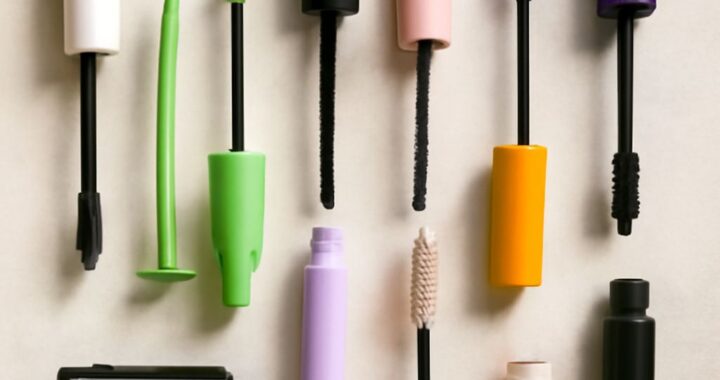
CoverGirl Clump Crusher uses a comb-like plastic brush with spaced teeth. That geometry removes some excess formula as you pull through, so it delivers strong separation and clean definition. You can build moderate volume, but it will not create the dense, false-lash effect of a heavily loaded fiber brush.
Maybelline Define-A-Lash uses a flexible elastomer brush with separated bristles designed to lengthen and define. It generally keeps lashes light and distinct, with less dramatic volume than Clump Crusher. Pick it for a natural, fanned-out finish; pick Clump Crusher when you want separation with slightly more buildable fullness.
Why mascara clumps: viscosity, brush loading, drying time, and layering
Viscosity controls how much formula stays on each lash. A thick, wax-heavy formula can create volume, but it also forms lumps when several lashes receive too much product. A thinner formula spreads more easily but may require additional coats.
Brush loading matters just as much. Dense bristles hold more mascara; combs and widely spaced elastomer teeth distribute and remove excess. As mascara dries, its film-formers set. Repeated passes over partly dried lashes pull neighboring lashes together, so add a second light coat while the first remains slightly tacky. Wipe excess from the wand, wiggle at the roots, and comb toward the tips once rather than repeatedly brushing dry lashes.