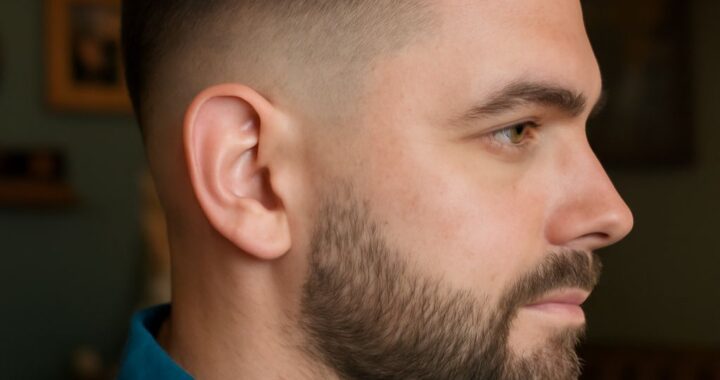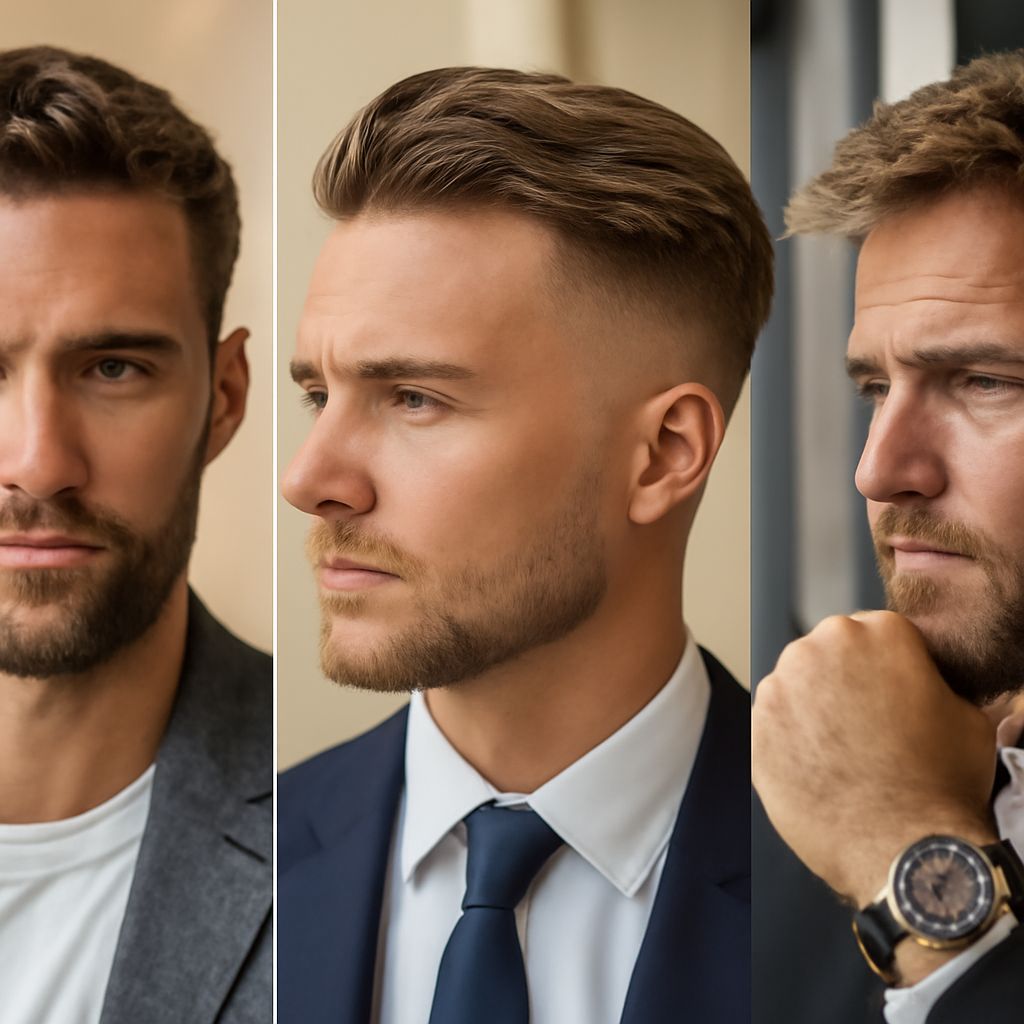
To learn how to choose a men’s haircut, prioritize your face’s proportions, your hair’s natural behavior, and the amount of styling you will maintain. A balanced cut does not hide your face; it controls where the eye sees length, width, and volume.
Use the process below before booking an appointment. You will arrive with a practical direction instead of asking for a vague “face-slimming” haircut.
How to Choose a Men’s Haircut: Assess Face Shape and Hair Behavior
First, compare your face length with its widest point. Measure from your hairline to your chin, then across your cheekbones or jaw. Note whether your jaw is rounded, square, pointed, or wider than your forehead.
- Oval: Your face is longer than it is wide, with gently tapered edges.
- Round: Your width and length are similar, with softer cheeks and jawline.
- Square: Your forehead, cheekbones, and jaw appear similarly broad.
- Oblong: Your face is noticeably long, with relatively limited width.
- Heart or diamond: Your forehead or cheekbones are wider than your chin.
Next, assess your hair. Identify straight, wavy, curly, or coily movement; fine or coarse strands; overall density; and cowlicks or uneven growth. These traits determine whether a style will hold its shape or require daily correction. Treat face shape as a guide, not a rule: your hair behavior and preferences can change the best option.
How Slimming Hairstyles Use Length, Width, and Volume
For a slimmer visual line, add height near the top and reduce bulk at the sides. A low or mid taper, textured quiff, side-parted crop, or controlled pompadour can lengthen the face without creating extreme contrast.
- Height: Place moderate volume above the forehead or toward the crown. Keep it textured rather than tall and rigid.
- Width: Remove excess fullness around the temples and upper sides when your face looks broad.
- Fringe: Choose a short, broken fringe to expose some forehead. A heavy straight fringe can visually shorten the face.
- Side volume: Keep it close for rounder faces, but leave some controlled fullness if your face is long or narrow.
- Parting: A natural side part creates direction and asymmetry. A center part can soften strong angles when your hair supports it.
Do not automatically chase the tightest fade. Severe side contrast can make a long face look longer, while a fuller side shape may balance it better.
How to Choose a Hairstyle for Texture, Density, and Maintenance
Match the haircut family to what your hair already does. Straight, dense hair often suits a textured crop, side part, taper, or quiff. Wavy hair can support a layered taper, loose side sweep, or medium-length scissor cut. Curly and coily hair usually benefit from controlled shape, clean edges, and enough length to prevent unwanted width.
Fine hair typically looks fuller with shorter textured layers and light products. Thick hair may need internal debulking rather than simply shorter sides. If your hair grows forward, follow that direction with a crop or short fringe. If it parts naturally, use that movement instead of forcing a new line.
Tell your barber how many minutes you will style each morning. A low-maintenance cut needs a forgiving outline, manageable length, and minimal product.
Turn the Choice Into a Clear Barber Brief
Consultation checklist: what to show, say, and confirm
- Bring two or three reference photos showing the front, side, and back. Choose examples with similar hair texture and density.
- Explain your goal: “Keep the sides narrow and add moderate height,” or “Preserve side fullness so my face does not look longer.”
- State your limits, including preferred length, fade level, fringe position, and daily styling time.
- Ask where the barber will remove weight, where volume will remain, and how the cut will grow out.
- Confirm the neckline, sideburn shape, top length, and product recommendation before the cutting begins.