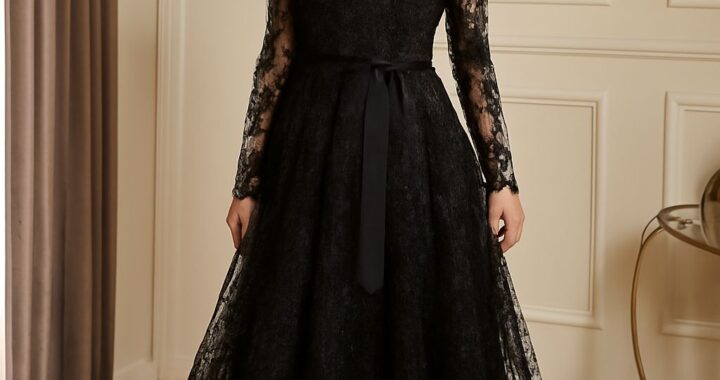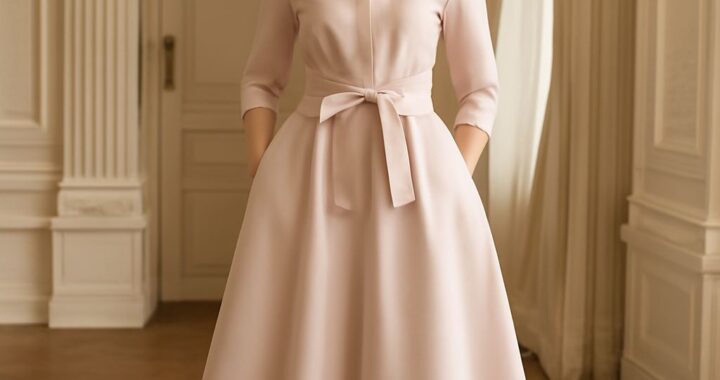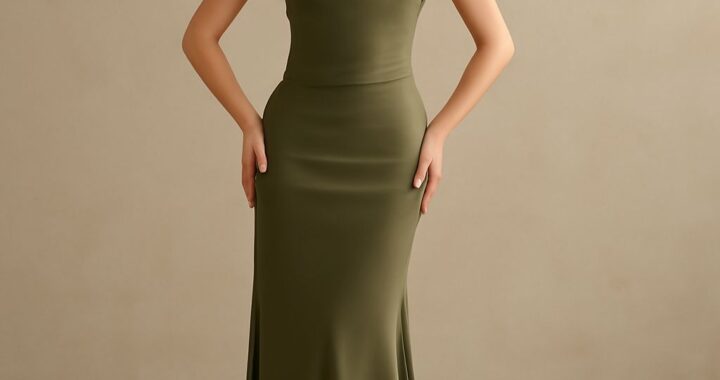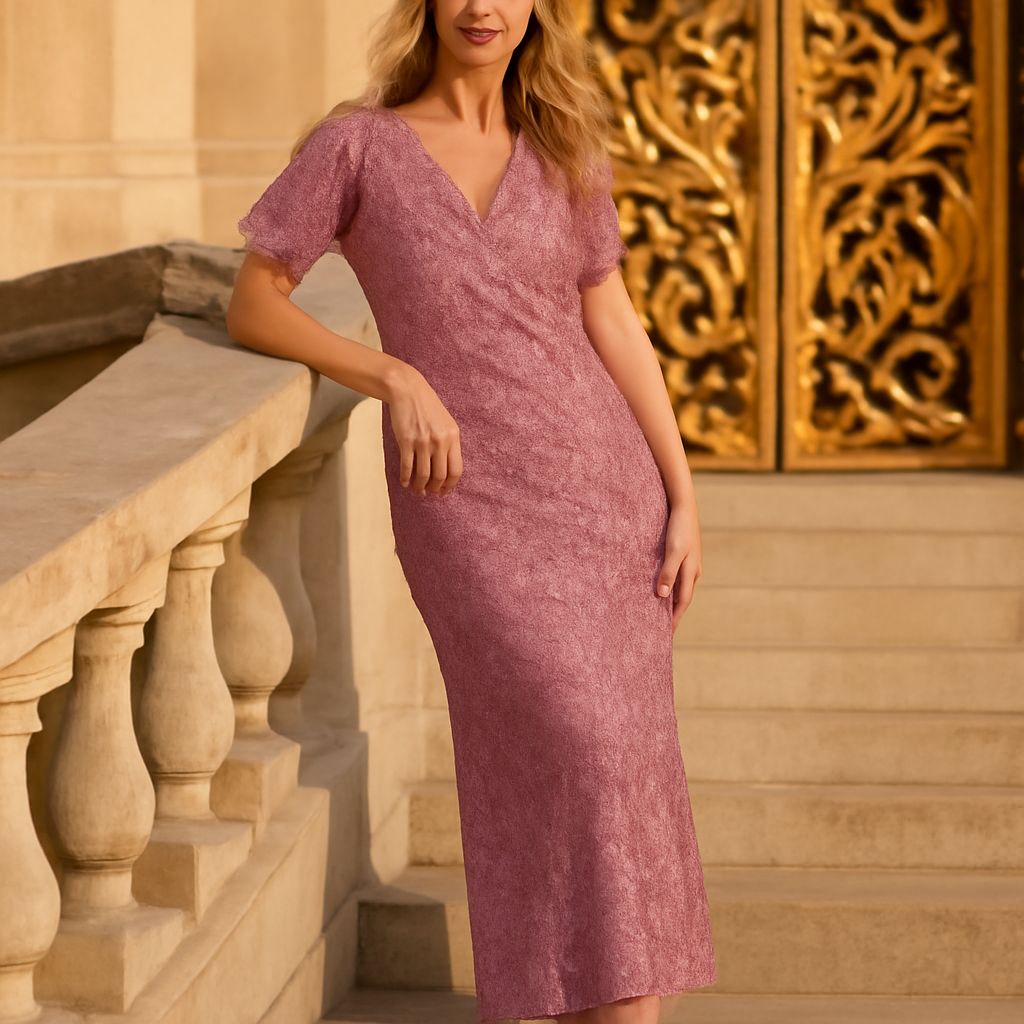
Women’s petite formal dresses should fit your proportions, not simply stop at a shorter hem. The best affordable gown has a correctly placed waist, balanced bodice, manageable length, and details scaled to your frame.
Evaluate value before focusing on price. A slightly more expensive dress may cost less overall if it avoids major bodice reconstruction or reshaping.
Women’s Petite Formal Dresses: Start With Bodice and Waist Proportion
Bodice length and waist placement
Petite sizing shortens the bodice as well as the skirt. A petite bodice should place the bust seams, neckline, and natural waist closer together. If the waist seam falls below your waist, the gown may look dropped and require structural alterations.
Check that darts, princess seams, and bust cups sit over your actual curves. Excess fabric above the bust, a gaping neckline, or armholes that fall too low usually signal an overly long bodice. Taking in side seams can help, but moving a waist seam or reshaping a lined bodice costs more.
Hem, scale, and detail position
A petite hem should skim the floor with your intended shoes, rather than pooling heavily. Also inspect the scale of lace, bows, beading, and prints. Oversized details can dominate a smaller frame, while narrow straps, smaller motifs, and restrained embellishment often look more balanced.
Silhouettes and Details That Preserve Petite Proportion
Choose silhouettes that create a clear vertical line. A slim column, gently fitted sheath, or lightly flared A-line usually works well. An empire waist can lengthen your lower half, but it should sit just below the bust rather than across it.
V-necklines, monochromatic color, and seams that run vertically can add visual height. Avoid excessive gathering at the hips or a very full skirt unless the gown’s waist and hem are precisely fitted. A defined waist gives many petite frames shape without overwhelming them.
How to Evaluate Affordable Gowns for Polished Construction
Affordable gowns can look refined when their materials and finishing support the design. Crepe, matte satin, chiffon overlays, and well-pressed jersey often photograph better than thin, highly reflective polyester. Look for a full lining, clean seam finishing, a smooth zipper, secure hooks, and fabric that hangs without twisting.
When cheap elegant dresses can still look polished
Cheap elegant dresses can look polished when embellishment is controlled and the construction is sound. Rub the fabric lightly to check for snagging, hold it toward bright light to spot transparency, and inspect the lining at the neckline and armholes. Beading should feel securely attached, while boning should lie flat rather than poke or buckle.
Compare affordable gowns by the alterations they invite. A simple hem is usually manageable; relocating a waist, rebuilding cups, or replacing a zipper may erase the savings.
Alterations to Anticipate: Try-On and Gown Order Checklist
At-home try-on checks
- Try the gown with your event shoes and undergarments. Confirm the hem clears the floor without hiding your shoes or creating a trip hazard.
- Stand, sit, walk, and raise your arms. Watch for pulling at the bust, gaping at the neckline, and armholes that restrict movement.
- Check the waist seam from the front and side. It should sit at your natural waist or the design’s intended position, not drift downward.
- Photograph the gown in natural light. Look for lining show-through, uneven draping, misplaced embellishment, and wrinkles around the zipper.
Alteration budget and decision points
- Usually manageable: a standard hem, strap adjustment, or minor side-seam refinement.
- Price carefully: bust reshaping, waist relocation, sleeve changes, or alterations to boned garments.
- Reconsider the purchase: if the shoulders, bust point, and waist all sit incorrectly before alterations.