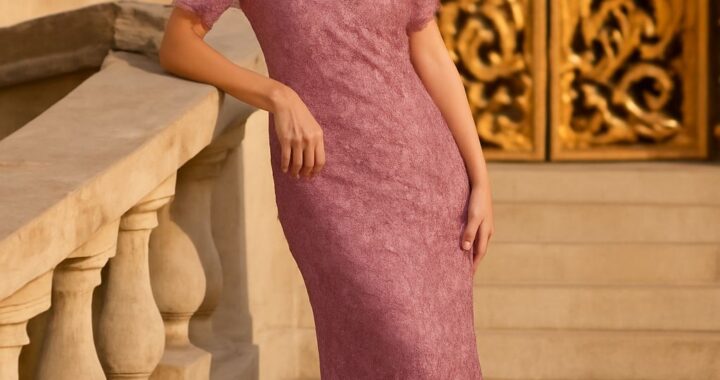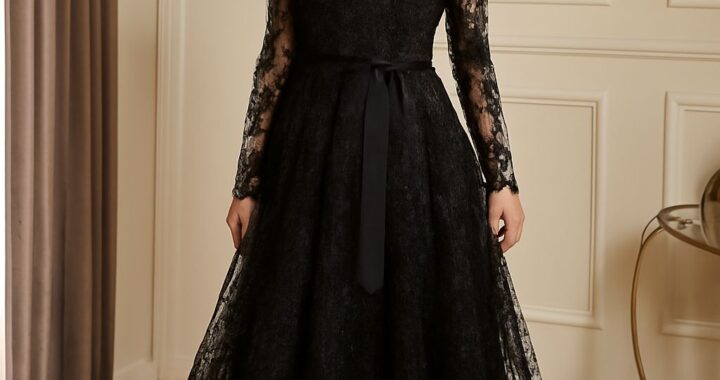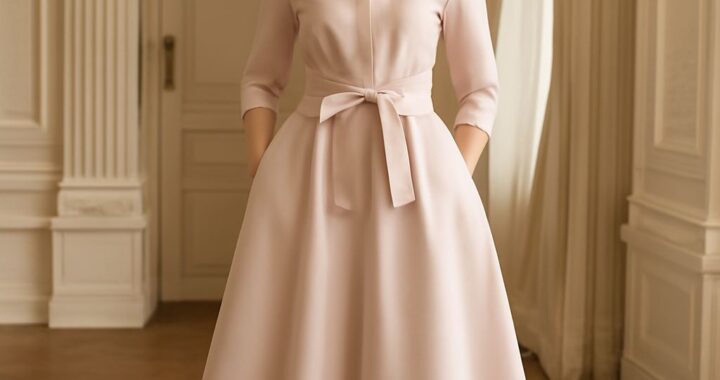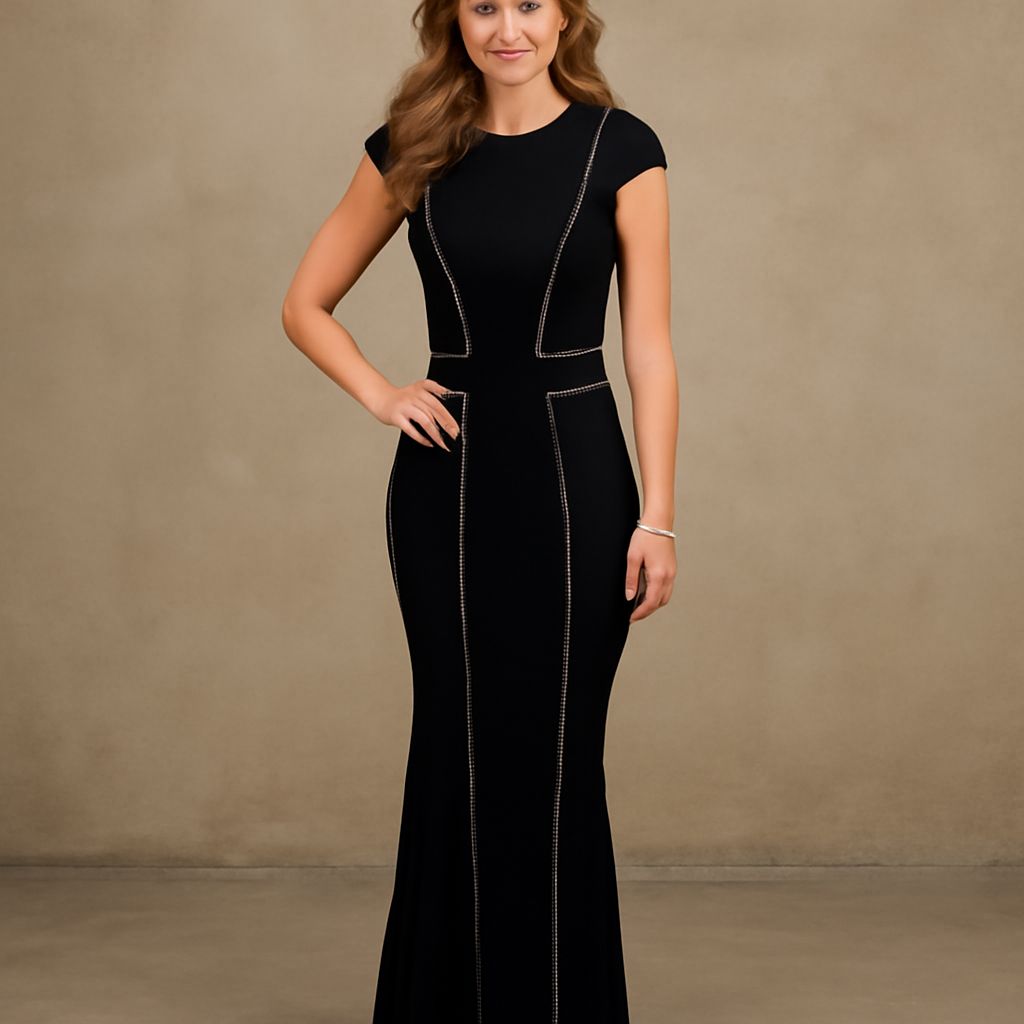
Formal gowns with sleeves give you intentional coverage without sacrificing a polished silhouette. For a ceremony, gala, or evening wedding, choose construction that follows your shape instead of simply adding fabric. The best dress balances a covered neckline or arm with a defined waist and controlled volume.
Before choosing, identify the invitation’s dress code, venue, and start time. A floor-length gown usually suits black tie, while a refined midi or shorter maxi works better for many semi-formal settings. Coverage should support the event’s formality, not make the dress appear heavier than necessary.
Formal Gowns With Sleeves: Match the Dress to the Event
Formal evening gowns generally suit black tie and call for a substantial, opaque fabric. Long sleeves, a high bateau neckline, and a clean column or A-line skirt create formal presence without excess decoration. Black tie optional allows a sophisticated midi, but fabric quality and tailored fit still matter. At a formal wedding, avoid trains or dramatic cutouts unless the invitation welcomes them. Let the venue guide finish: satin and velvet suit evening interiors, while crepe travels well across seasons.
When Modest Semi-Formal Dresses Are the Right Choice
Choose modest semi formal dresses when the invitation says cocktail, dressy casual, or semi-formal, or when a floor-length gown would feel overdressed. Look for a knee, midi, or ankle-skimming hem, a shaped waist, and sleeves that finish near the elbow or wrist. A wrap-style bodice with a secured neckline, tailored sheath, or softly pleated A-line can provide coverage while retaining movement. Dressy shoes and refined jewelry elevate simpler fabric; avoid excessive sparkle if the event is daytime.
Sleeves, Necklines, Lining, and Fabric for Intentional Coverage
Coverage depends on construction, not just sleeve length. Set-in sleeves create a crisp shoulder line; raglan sleeves add ease but may broaden the upper body. A fitted sleeve should let you bend your elbow, while a sheer overlay needs an opaque lining.
A bateau, jewel, or modest V-neck limits exposure and frames your face. Check for a hidden snap and armholes that stay flat when you move. Lining reduces cling and controls transparency. Crepe skims, satin reflects light, and lined chiffon adds softness. Hold fabric toward a light source; opacity can vary across the bodice, skirt, and sleeves.
Defined Silhouettes That Preserve Shape and Movement
Preserve shape by balancing volume. A fitted bodice and gently flared skirt support full sleeves; a slim sleeve suits pleats or layers. Princess seams, darts, and a defined waistband shape the torso without tightness. Choose an A-line for movement, a column for a long vertical line, or a wrap-inspired style for adjustable ease. If you choose a ball gown, keep its neckline and sleeves streamlined. Sit, raise your arms, and walk before committing. The dress should skim rather than pull, with room for undergarments and a supportive bra.
How to Style Black Evening Gowns With Sleeves for Balanced Proportion
For black evening gowns with sleeves, look polished when you vary texture or proportion. A close-fitting sleeve pairs with a lower-volume skirt, while a voluminous sleeve needs a clean waist and simple jewelry. Pointed-toe pumps or sleek heels extend a column; metallic shoes add contrast without interrupting the line.
- Choose a slim clutch and small earrings with ornate sleeves.
- Add a narrow belt only if the gown has a clear waist seam.
- Keep a wrap or stole close to the body and proportional to sleeve volume.