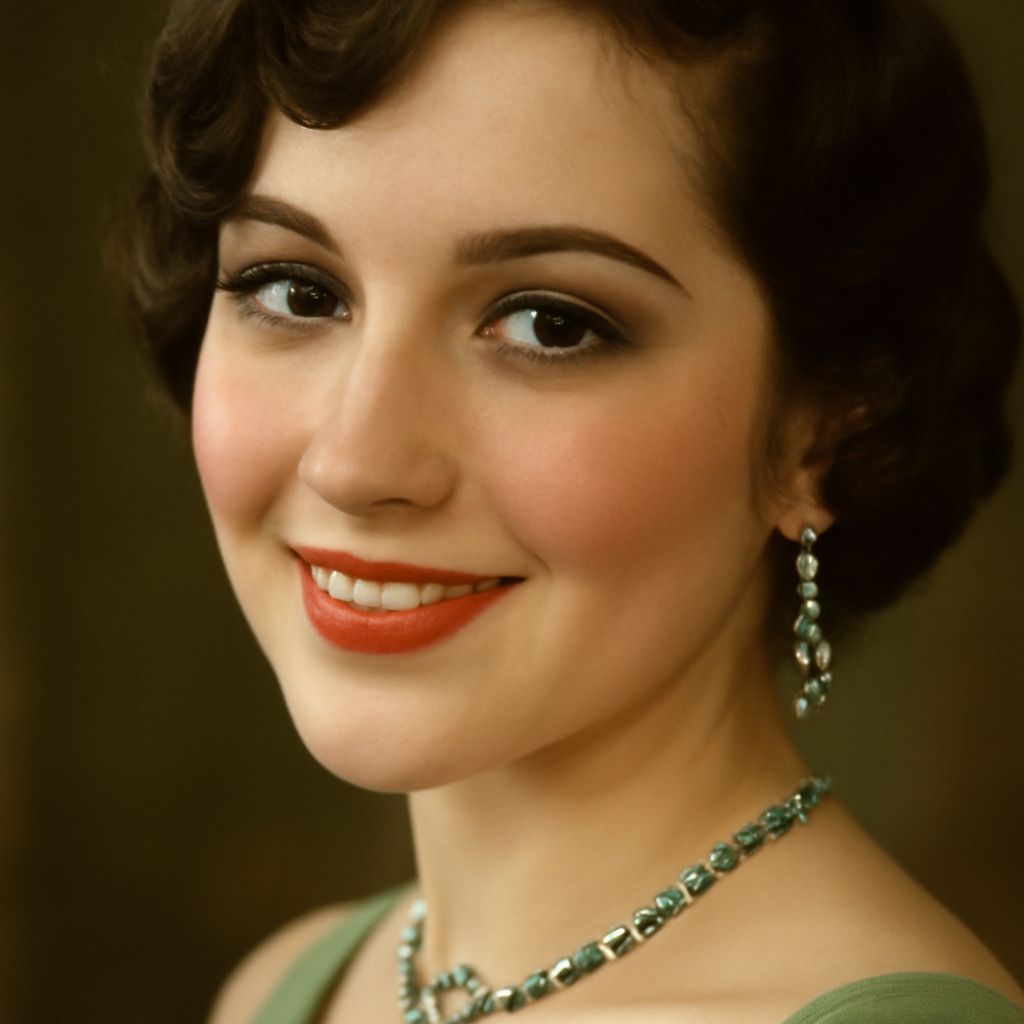
A softly powdered complexion, defined eyes and a red lip can give you the unmistakable mood of the Jazz Age without requiring a costume department. To make a historically informed 1920s makeup look, begin with a few documented ideas, then adapt their intensity to your face and the occasion. The makeup of the 1920s was varied: a film magazine’s advice was one point of view, not a rule followed by everyone.
20’s Makeup: Start With the Sources
For a historically grounded 1920s makeup look, a useful first stop is an August 1, 1928 Oregon newspaper beauty column. Its advice for a blonde reader includes light rouge, a coordinating lipstick, brown mascara and brown eyebrow pencil. That is a specific contemporary recommendation, not a prescription for your coloring. It does show how a writer of the time brought cheeks, lips, lashes and brows into one composition.
For another glimpse of authentic 1920s makeup, look at the objects themselves. Chertsey Museum holds a powder rouge and red lipstick dated around 1928. London Museum also identifies a bright pink rouge from 1920–1930 in dancer Anna Pavlova’s makeup tray. For a historically grounded 1920s makeup look, these objects establish products and colors that existed; they cannot tell us exactly how every wearer applied them.
A November 1929 issue of Screenland discusses powder, rouge, lipstick and eye makeup in relation to individual coloring. It is a film fan magazine, so treat its advice as a window into a beauty ideal, not a survey of daily routines. The makeup 1920s beauty writers recommended reflected both practical suggestions and opinions about who should wear which color. You can borrow the first and leave the second in the archive.
Create a Soft, Even Base
Begin with moisturizer suited to your skin, then apply a thin layer of foundation or concealer only where you want it. Choose a shade that matches your skin instead of automatically making it pale. Powder was part of period beauty culture, but the idea that everyone wore the same ghostly complexion is a poor substitute for a look at the sources. The Smithsonian’s history of makeup places visible color cosmetics in a broader, changing social context.
Use a small brush or puff to press a light veil of loose powder over the center of the face. Leave the texture of skin visible. If you want a more theatrical finish for an evening event, add another thin layer and check it in the light where you will be photographed. Among makeup trends of the 1920s, powder created a soft surface; the aim here is a finish that lets the eyes and mouth take the lead, not a mask that settles into every expression.
For historically informed makeup from the 1920s, choose a powder blush in rose, berry or a warm red that works with your lipstick. Tap off the excess and build gradually on the apples of the cheeks, blending the edges. The surviving 1928 rouge and the 1920–1930 pink example support the use of rouge, not one mandatory placement. This rounded application is a present-day interpretation of period color, easy to adjust from subtle to party-ready.
Define Eyes and Brows
This evidence-based look at 1920s makeup begins at the eyes: the 1928 column’s brown mascara and brow pencil are a useful starting point for an everyday version of 20’s makeup. Brush brows into place and fill sparse areas with short, light strokes. For a softer period-inspired outline, follow your natural brow rather than plucking it into a thin line. Brow gel can hold the shape; it is a modern convenience, not a historical requirement.
Sweep a matte taupe or soft charcoal shadow over the lid and blend the edge upward without taking the color all the way to the brow. Trace a fine line close to the upper lashes with a pencil, then soften it with a clean brush. Finish with mascara, adding a second coat if you want more definition. The shadow and softened liner adapt 1920s beauty trends in a modern interpretation of the smoky eye often associated with the decade; the cited 1928 column specifically documents mascara and brow pencil, not this entire eye recipe.
For a daytime 1920s-inspired makeup look, use brown and keep the lower lash line nearly bare. For a photograph or evening look inspired by 1920s cosmetics, deepen the outer lid a little and check the result with your eyes open. Eye shapes vary, and a line hidden in the crease will do less work than one you can actually see. Keep pigment out of the eye itself and use products labeled for eye use.
Give the Lip Its Moment
A historically grounded makeup look from the 1920s can begin with the lips: a red lipstick gives authentic 1920s makeup an immediately recognizable focal point, and the surviving red stick from around 1928 is a concrete reference. Choose a modern satin or soft-matte formula that feels comfortable on your lips. A blue-red, brick or berry red can all work with the rest of your makeup; match the depth to the effect you want rather than forcing a single supposedly correct shade.
For a defined Cupid’s bow—the two peaks at the center of the upper lip—trace your natural outline with a lip pencil, then fill in with lipstick. If you like the compact, rounded mouth associated with screen glamour, emphasize the center gently with a lip brush. That shaping is a modern styling choice here; the surviving lipstick alone does not establish its wearer’s lip shape. Blot once on tissue and add a second thin layer for a more even finish.
Balance the Whole Look
Of the many 1920s makeup trends, the combination of visible lip and cheek color offers an accessible route into the look. Coordinate their undertones loosely: a berry lip with rosy cheeks, for instance, or brick red with a warmer blush. They do not have to be identical. A simple hairstyle, a dark dress or an evening earring can carry the mood without asking every detail to announce the decade.
Try the complete look in daylight and again under the lighting of your event. Historical makeup from the 1920s can inspire either a restrained daytime face or a more dramatic interpretation; adjust one feature at a time. If the eyes and lips seem to compete in a photograph, soften the shadow edge or blot the lipstick once. If powder catches around the nose or mouth, press a clean, slightly damp sponge over the area to bring the finish back to skin.