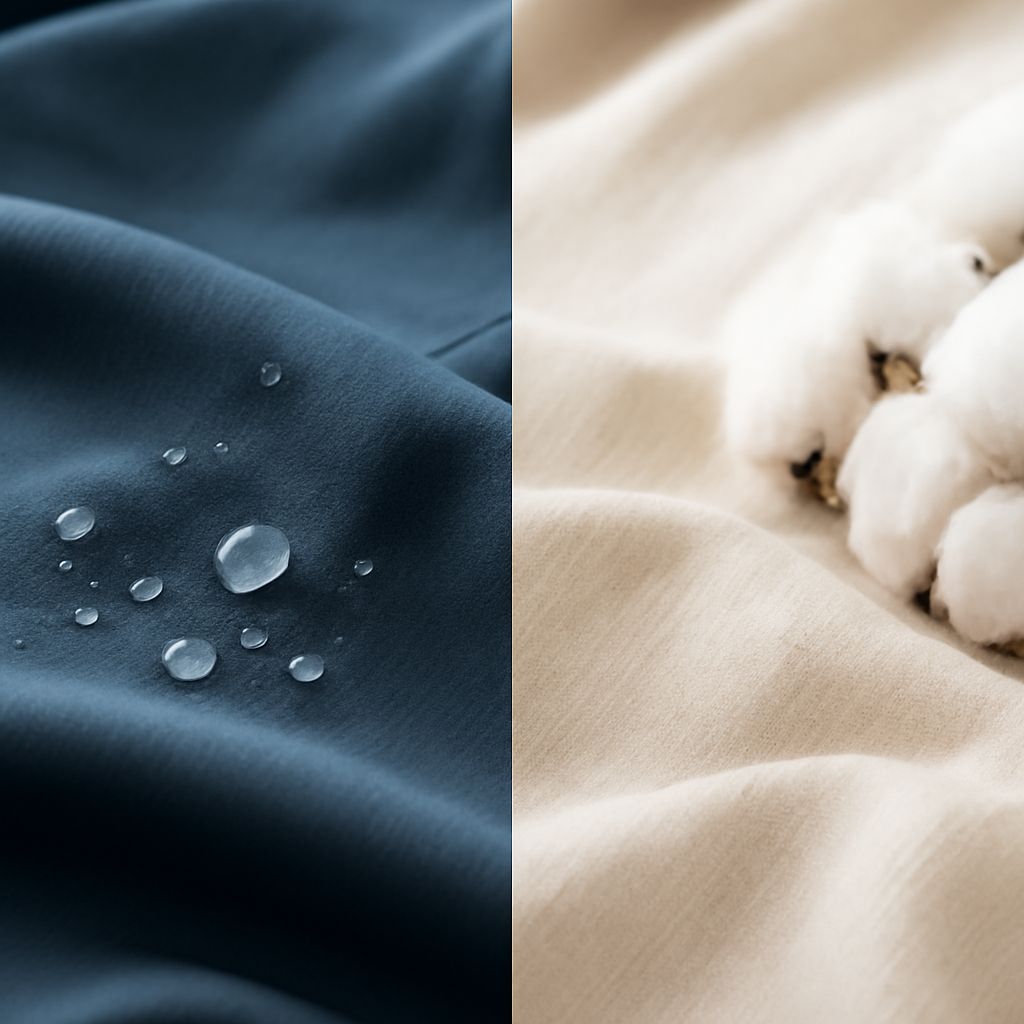
Two shirts can look nearly identical on a hanger and feel completely different when you put them on. One has a crisp shape; the other falls softly. The question of polyester compared with cotton starts on the fiber label, but it does not end there: construction, weight, fit and finish all contribute to the garment you actually wear.
When comparing cotton with polyester, think about the occasion too. A shirt for a long travel day may have different demands from one worn under a structured jacket. Your laundry routine and your own preferences belong in the decision, not just the fabric name.
Cotton vs Polyester: Start With the Label
Cotton is a natural fiber from the cotton plant; polyester is a manufactured synthetic fiber. Both can be made into many kinds of fabric, from a lightweight knit to a more structured woven shirt. A knit is made from interlocking loops of yarn; a woven fabric is made by crossing yarns. That construction helps explain why two shirts with the same fiber content can behave differently.
The polyester vs cotton comparison is also about the garment as a whole. A loose cotton jersey tee and a closely woven cotton button-down share a fiber but have different shapes and surfaces. A polyester shirt can likewise vary in texture, thickness and finish. Read the fabric description, then touch or try the actual shirt when possible.
A blend combines fibers in one fabric. Check the percentages rather than assuming that a shirt described as “cotton blend” contains mostly cotton. Heathered colors may have a different composition from solid colors in the same style, so inspect the exact color’s label. The way a blend feels will depend on the yarn and construction as well as the recipe.
Three Real Shirts to Compare
Gildan’s 2023 U.S. style and color guide provides three concrete starting points. These are historical catalog descriptions, not guarantees about today’s stock or every color of a later version:
- Heavy Cotton 5000 adult T-shirt: the guide lists 100% U.S. cotton and a fabric weight of 5.3 ounces per square yard. It is a reference for a classic-fit cotton tee.
- Performance 42000 adult T-shirt: the guide lists 100% polyester at 5.0 ounces per square yard, with a modern classic fit. Compare its feel and intended use with the cotton option.
- DryBlend 8000 adult T-shirt: the guide describes a 50% cotton, 50% polyester fabric at 5.5 ounces per square yard. It offers a blend to compare alongside the two single-fiber examples.
The numbers describe fabric weight per area, not the weight of the finished shirt. A higher number does not automatically mean a garment is better, more opaque or warmer: hold the fabrics up, look at the construction and try them on. For a particular size and color, verify the composition and care label with the seller before buying.
Think About Feel and Intended Use
A shirt that feels pleasant in your hand may feel different after an hour under a jacket. Try moving your arms, sitting and looking at the hem when you raise your hands. Check whether a seam, collar or sleeve feels distracting. If you shop online, compare the garment measurements with a shirt you already enjoy and check the return terms.
For a relaxed day, you may prefer the texture and shape of a cotton tee. For travel or activity, you might choose a polyester shirt described for that purpose, or a blend that feels right to you. Some fabrics are designed to move moisture away from the surface of the skin; look for that claim on the specific garment rather than assuming it applies equally to all shirts of one fiber.
When weighing cotton vs polyester, also consider the setting. A structured woven shirt can sit neatly under a blazer, while a jersey tee gives a more casual line. A dressier shirt may have a smooth finish regardless of fiber. A cotton vs polyester comparison starts with the label; your own fit test tells you whether the garment works for your day.
Weight, Drape and Opacity
Drape is the way fabric falls on the body. A soft, fluid shirt may move with you, while a firmer one can hold a more defined shape. Neither result belongs exclusively to one fiber. Yarn, fabric construction and finishing all make a difference, so compare actual garments rather than relying on a broad material ranking.
If you care about sheerness, hold the shirt up to light and try it with the underlayer you intend to wear. Color and construction can affect what is visible. Check a white shirt in daylight as well as under store lights, and look at the back as well as the front. Choose the amount of coverage you like; there is no single required result.
The polyester vs cotton question can look different for a close-fitting top than for an oversized shirt. Extra room changes how fabric hangs and how much space there is between the garment and your body. Compare the shoulder seam, chest, sleeve and length before deciding that a particular fiber is responsible for the fit.
Plan for Laundry and Longevity
Before choosing polyester or cotton, read the care label on the specific piece. Follow its instructions for washing temperature, drying and ironing, including any special guidance for prints or trims. If you are comparing two shirts online, ask the retailer for the label if the information is missing. A care routine you can realistically follow is part of a useful purchase.
Notice how much care you are willing to give each shirt. One fabric may look the way you like after air drying, while another may need attention to its shape or finish. Avoid guessing that every cotton item can be treated the same way or that all polyester garments share one drying instruction. Different blends and finishes can have their own requirements.
Comparing polyester vs cotton shirts is most useful when you put the same questions to each: Does it fit? Do you like the texture? Can you follow the care directions? Will it work with what you already own? Whether you choose a cotton or polyester shirt, or a blend of both, let the garment’s details and your own priorities make the final decision.