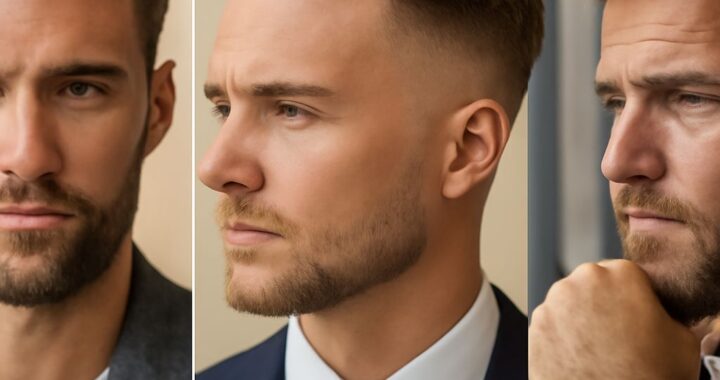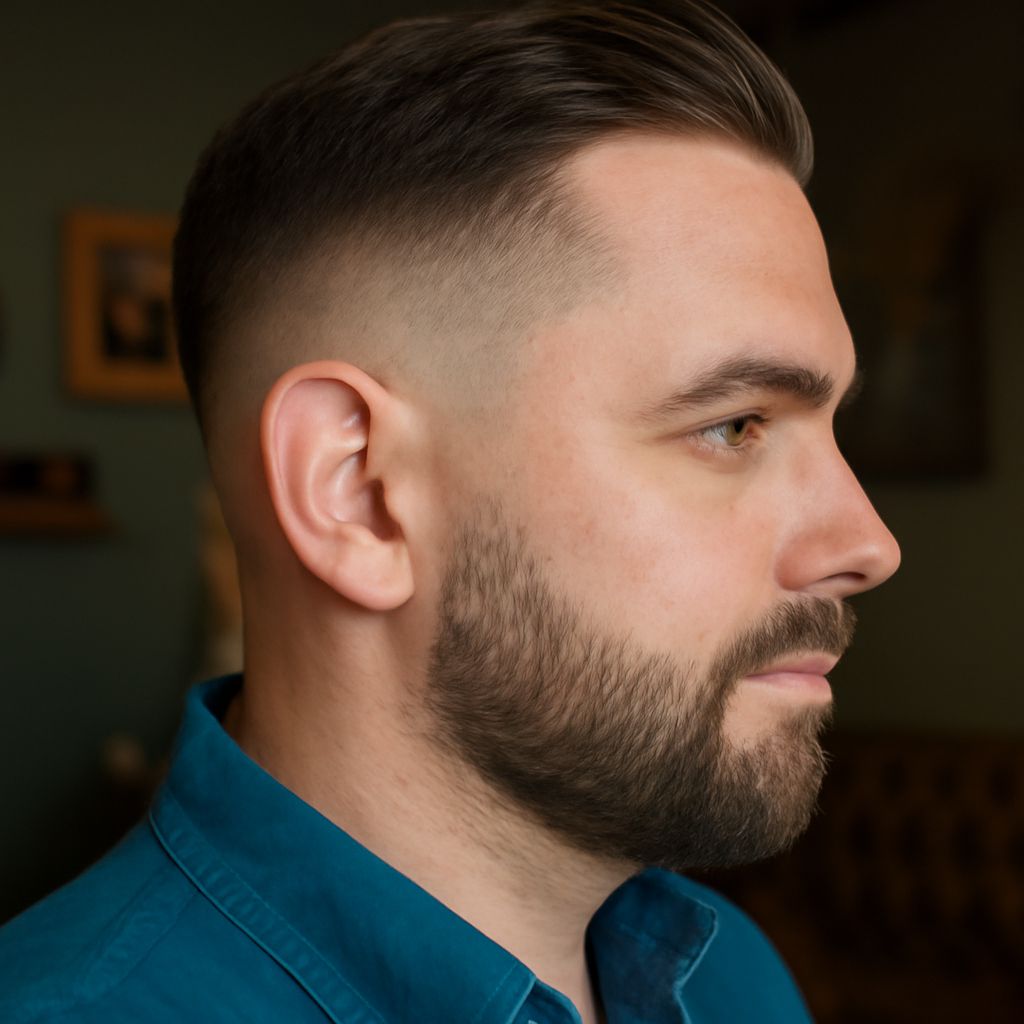
The most balanced hairstyle for receding hairline usually works with your hairline, not against it. Choose a textured crop or short side-directed cut when density is uneven; choose a forward fringe when the front still has enough thickness to support texture.
Assess your temples, central hairline, crown, and face shape before choosing a length. No haircut conceals every recession pattern, but the right direction, texture, and maintenance routine can make your style look intentional.
Choosing a Hairstyle for Receding Hairline by Face Shape
A mature hairline with strong central density gives you more options than diffuse thinning across the entire top. Deep temple recession often suits a shorter, open style better than a heavy fringe. A low, even hairline can support forward movement.
- Oval: Most proportions work, so follow your natural density and growth direction.
- Round: Keep the sides tighter and add modest height or angled texture. Avoid a blunt, wide fringe.
- Square: Use a soft textured crop or side direction to balance a strong jaw.
- Oblong: Choose a fuller fringe or moderate side volume. Avoid excessive height and ultra-short sides.
- Heart-shaped: A loose forward fringe adds weight near the forehead without emphasizing narrow temples.
When a Men’s Fringe Hairstyle Works: Direction and Texture
A forward fringe works best when your frontal density remains reasonably even. Ask for choppy texture instead of a straight, solid line. Separated pieces break up thin areas and look less deliberate.
Push the fringe diagonally toward a stronger temple when one side recedes more. This follows your natural growth instead of forcing hair over a gap. A fringe hairstyle for men stays easier to maintain when your barber point-cuts the ends and leaves enough length for a light matte product.
Skip a forward fringe if the front is sparse, wispy, or visibly different from the sides. Heavy product, wet shine, and a hard horizontal edge can expose separation. Blow-dry forward on low heat, then pinch small sections into place.
Alternative Cuts by Recession Pattern: Finding the Best Haircut for My Face
When you ask, “What is the best haircut for my face?” compare face shape with recession pattern, density, and daily styling time.
- Even temple recession: Try a textured crop with a low or mid taper. Broken texture reduces contrast between the hairline and top.
- One deeper temple: Choose a side-directed style from the fuller side. Keep enough length to move diagonally, but do not comb it flat across the recession.
- Diffuse thinning: Choose a short crop, buzz cut, or close Caesar-style cut. Similar lengths reduce differences between thin and dense zones.
- Receding front and thinning crown: Keep the top short and textured. Going shorter usually looks cleaner than adding height.
What to Ask for at the Haircut
Give your barber a clear plan before the clippers start:
- Identify your weaker temple, thinnest zone, and natural part.
- Explain whether you air-dry, blow-dry, or style daily.
- Ask for a taper or fade that suits your density; an aggressive skin fade can expose thin top hair.
- Request point-cut texture and confirm the front length needed for your chosen direction.
- Confirm side length, neckline, and how often the cut will need maintenance.