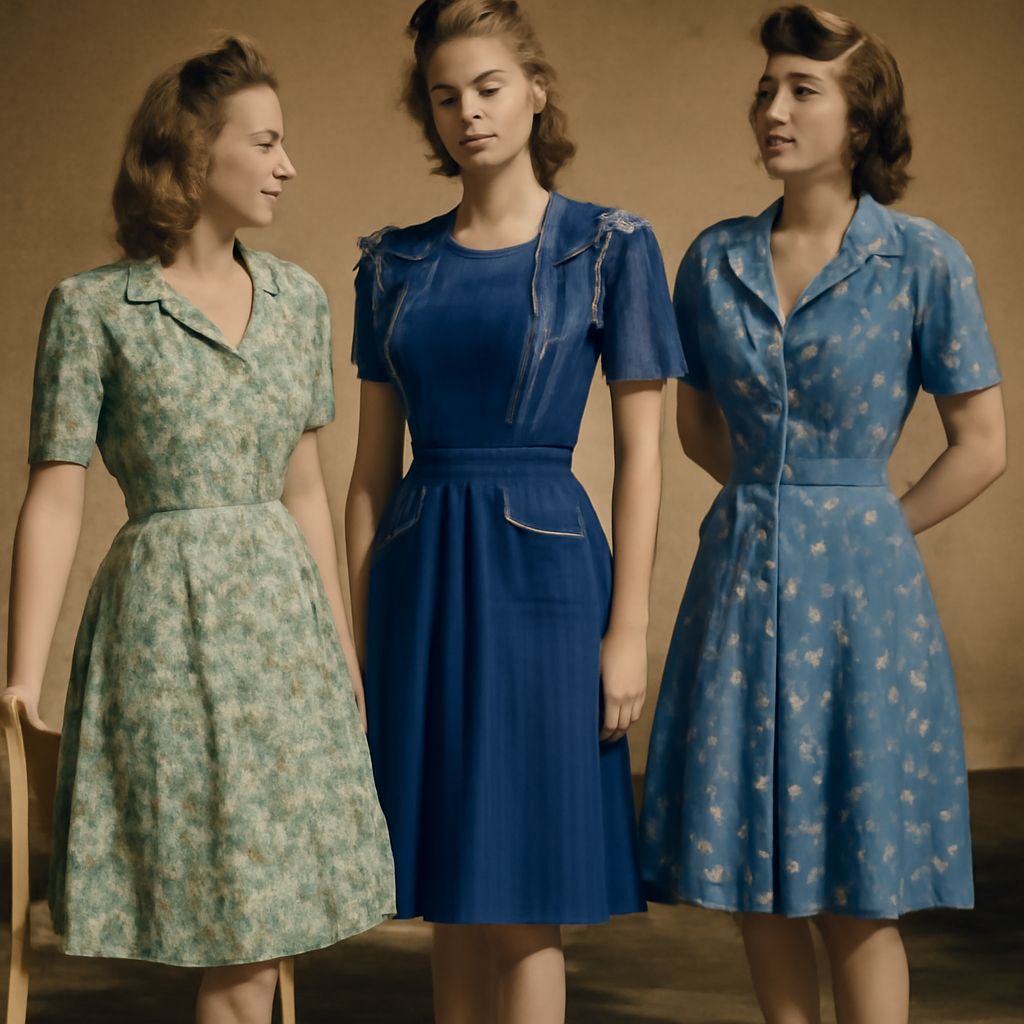
To recognize 1940s-style dresses, look for a defined waist, strong shoulders, a modest neckline, and a skirt that falls from the hips rather than clinging tightly. The overall shape feels polished, practical, and distinctly feminine without excessive volume.
Whether you prefer authentic 1940s style dresses or updated 40s style dresses, focus on the era’s proportions first. Fabric, sleeves, prints, and accessories then make the silhouette more convincing. If you browse old fashion dresses, these details will help you separate a true 1940s influence from a generic retro design.
What defines the 1940 dress style: waists, shoulders, and prints
The defining 1940 dress style balances a narrow-looking waist with visual width across the shoulders. Many dresses use shoulder pads, gathered sleeve caps, or structured seams to create a squared, authoritative upper body. The waist usually sits at the natural waist, sometimes emphasized with a matching belt, shaped waistband, or softly fitted bodice.
Skirts generally reach the knee or mid-calf. They may be gently flared, pleated, gored, or cut in a relaxed A-line. Unlike the full circle skirts associated with the 1950s, 1940s skirts usually use less fabric and fall closer to the body. A slim skirt can still move comfortably when it includes kick pleats, gathers, or strategic panels.
Necklines tend to be modest but varied. Look for shallow V-necks, square necklines, rounded collars, and softly draped or notched openings. Sleeves add much of the period character: fitted bracelet sleeves, short puffed sleeves, elbow-length sleeves, and fuller bishop or lantern shapes all work well.
Prints often include small florals, checks, stripes, polka dots, and restrained novelty motifs. Colors can be muted, earthy, or jewel-toned rather than pastel-heavy. A print with a small scale and a clear, tailored silhouette usually looks more authentic than a loud pattern paired with excessive decoration.
1940s style dresses: Key silhouettes, fabrics, and construction details
The most useful silhouette for everyday wear is a fitted bodice with a defined waist and an easy, below-the-knee skirt. Shirtwaist dresses, wrap-inspired dresses, and button-front styles capture this balance particularly well. A peplum at the waist can also suggest the period, especially when it sits over a narrow skirt.
For a more tailored look, choose a dress with princess seams, darts, a notched collar, or a matching fabric belt. These construction details shape the body without relying on stretch. Covered buttons, bound buttonholes, contrast piping, and decorative topstitching add interest while keeping the design practical.
Practical fabrics are central to the look. Cotton works for warm-weather day dresses, while rayon crepe gives a fluid drape and a slightly dressier finish. Wool, gabardine, linen, and sturdy blends suit cooler weather or tailored designs. For modern shopping, prioritize fabric with enough weight to hold the shoulder and waist shape. Very thin, shiny polyester can make the dress look theatrical rather than period-inspired.
For a classic 1940 style dress, check the garment’s movement as well as its appearance. You should be able to sit, walk, and lift your arms comfortably. A skirt with a back pleat or vent offers mobility, while a lined bodice prevents lightweight fabric from collapsing around the waist.
Daytime 1940’s style dresses versus evening and occasion styles
Daytime 1940’s style dresses are usually restrained, useful, and easy to wear. Cotton shirtwaists, rayon day dresses, and tailored wool styles may feature practical buttons, short or three-quarter sleeves, modest collars, and small prints. Pair them with low heels, sturdy pumps, or simple flats for an everyday interpretation.
Evening dresses use more fluid lines and richer surfaces. Rayon crepe, silk, satin, velvet, and chiffon can create a longer, more elegant shape. Look for softly draped necklines, gathered bust details, fitted sleeves, a defined waist, or a long skirt that skims the body. Evening glamour in this era often relies on strong construction and graceful draping rather than layers of sparkle.
For weddings, parties, or formal dinners, select one dramatic feature: a bias-cut skirt, a deep jewel tone, a graceful sleeve, or a sculptural neckline. Add refined jewelry and a small handbag instead of combining every vintage detail at once.
How to style a modern 1940 style dress without looking like a costume
Start with the dress, then choose two or three supporting details. A modern 1940 style dress already provides the main historical reference, so your accessories should clarify the influence rather than compete with it.
- Define the waist: Use the dress’s matching belt or add a narrow leather belt in brown, black, burgundy, or navy. Avoid an oversized contemporary belt that changes the proportions.
- Choose period-friendly shoes: Try T-straps, low pumps, ankle-strap shoes, loafers, or modest wedges. A modern pointed pump also works when its shape remains simple.
- Add one structured accessory: Select a top-handle handbag, compact shoulder bag, small beret, or neatly tied headscarf. A structured shape reinforces the tailored silhouette.
- Keep jewelry focused: Pearl studs, a brooch, a watch, or a short necklace provides polish. Choose one noticeable piece instead of stacking several costume-style accessories.
- Use hair and makeup selectively: Soft waves, a side part, a snood, or a simple victory-roll detail can suggest the decade. You do not need elaborate styling for the dress to read as vintage-inspired.
- Layer for practicality: Add a cropped cardigan, fitted jacket, trench coat, or tailored wool coat. Keep the outer layer shaped at the shoulders and waist.
Before buying, use this checklist: confirm the natural waist placement, inspect the shoulder shape, check the skirt length, and identify at least one authentic detail such as a collar, pleat, button treatment, or sleeve shape. Then ask whether you can wear the dress with your existing shoes and coat. If the answer is yes, you have a convincing vintage-inspired outfit rather than a costume.